Showing posts with label poetry. Show all posts

Sunday, 9 November 2008

Remembrance Sunday - A soldier's Declaration

The "old lie" featured recently in the South Wales Echo who inform us that the people who fought in World War One died for "our" freedom. In truth, working class people were sent to butcher working class people from other countries on behalf of their rulers. A whole generation was damned so that the elites in our society could extend their power and wealth -as in World War One, so in Iraq and Afghanistan.

Siegfried Sassoon, the great poet, was swept up by patriotism and in 1914-15 joined up. He gained a reputation for exceptional bravery, including the single-handed capture of a German trench. He would go out on night raids and bombing patrols and known for his manic courage. He was decorated for bravery.

Two years later he realised "the whole damn thing was a lie" and decided to make a stand against the war. He hurled his medals into the River Mersey, before making the following declaration that was printed in the Times and read and discussed in Parliament.

I am making this statement as an act of wilful defiance of military authority because I believe that the war is being deliberately prolonged by those who have the power to end it.

I am a soldier, convinced that I am acting on behalf of soldiers. I believe that the war upon which I entered as a war of defence and liberation has now become a war of agression and conquest. I believe that the purposes for which I and my fellow soldiers entered upon this war should have been so clearly stated as to have made it impossible to change them and that had this been done the objects which actuated us would now be attainable by negotiation.

I have seen and endured the sufferings of the troops and I can no longer be a party to prolonging these sufferings for ends which I believe to be evil and unjust. I am not protesting against the conduct of the war, but against the political errors and insincerities for which the fighting men are being sacrificed.

On behalf of those who are suffering now, I make this protest against the deception which is being practised upon them; also I believe it may help to destroy the callous complacency with which the majority of those at home regard the continuance of agonies which they do not share and which they have not enough imagination to realise.

Friday, 15 August 2008

MAHMOUD DARWISH: 13th March 1941 – 9th August 2008

Her eyes are Palestinian
Her name is Palestinian
Her dress and sorrow Palestinian
Her kerchief, her feet and body Palestinian
Her words and silence Palestinian
Her voice Palestinian
Her birth and her death Palestinian

The LEFT Alternative in Cardiff salutes Mahmoud Darwish who died this week. Adam Johannes writes in tribute.

Mahmoud Darwish was not only the poet of Palestine, but one of the great poets of the twentieth century. It is perhaps fiting that he died aged 67 - the same age at which Edward Said, the great intellectual of national liberation, bid farewell to life, and in the same year as George Habash. All three men died in exile, and all three were iconic figures of Palestinian nationalism. They formed part of a generation of giants forged in the afterglow of the 1968 battle of Karemeh and birth of the PLO, and their lives spanned the great epic of modern Palestinian history that rose from the ashes of 1948 when the land disappeared from the maps of the world. Tragically none lived to see freedom and justice restored.

In Darwish's writing Palestine was not only Palestine, but also the loss of Eden, the fall of innocence, birth and resurrection, dispossesion and exile, love and rage. Stripped of his Israeli 'citizenship', a citizenship he famously derided in his poem 'Identity Card', he spent most of his life in exile, he was a witness to the '82 Israeli invasion of Lebanon when Beirut with all its flowers came to smell of smoke and fire. Beirut was to be a pivotal moment for him, his poetry and the dream of Palestine. He left on the raft of a ship with other members of the Resistance for Tunisia.

One commentator captured the greatness of Darwish: "under house arrest, having his second-class citizenship revoked, being chased and hounded from one exile to another, being bombed in almost each of these exiles and living under countless sieges, Darwish's humanism never succumbed. One of his most popular poems, Rita, spoke of his love for a Jewish Israeli woman by that name; and about the absurdity of wars coming between lovers. This poem was made into a popular song by Lebanese musician Marcel Khalife."

His deep humanism was witnessed in his address to the Israeli soldiers shelling his neighbourhood during the 2002 siege of Ramallah,

You, standing at the doorsteps, come in
And drink with us our Arabic coffee
For you may feel that you are human like us


Darwish will also be remembered for his hand in crafting the 1988 declaration of independence, and the speech with which Arafat electrified the UN General Assembly in 1974, "Today I have come bearing an olive branch and a freedom fighter's gun. Do not let the olive branch fall from my hand. Repeat, do not let the olive branch fall from my hand". He has the good sense to reject the the sell-out of the Oslo frauds.

Towards the end of his life, he became dismayed at the division in the Palestinian house. Last summer in a bitter voice thick with irony, he was to declaim:

"We have triumphed . . . Gaza won its independence from the West Bank. One people now have two states, two prisons who don't greet each other. We are victims dressed in executioners' clothing. We have triumphed knowing that it is the occupier who really won. We have to understand - not justify - what gives rise to this tragedy.

It's not because they're looking for beautiful virgins in heaven, as Orientalists portray it. Palestinian people are in love with life. If we give them hope - a political solution - they'll stop killing themselves.

Sarcasm helps me overcome the harshness of the reality we live, eases the pain of scars and makes people smile . . .the sarcasm is not only related to today’s reality but also to history. History laughs at both the victim and the aggressor.

I will continue to humanise even the enemy... The first teacher who taught me Hebrew was a Jew. The first love affair in my life was with a Jewish girl. The first judge who sent me to prison was a Jewish woman. So from the beginning, I didn't see Jews as devils or angels but as human beings." [Several poems of his poems were to Jewish lovers] "These poems take the side of love not war"

This poem written during the siege of Beirut, contains a line that poignantly captures the deadlock of the Palestinian resistance - "Where do we go after the last frontier? Where does the bird fly after the last sky?". After armed struggle, appeals to international law and the conscience of the world, negotiations, peace processes. mass civil disobedience, Palestine still remains unfree:

The earth is closing on us, pushing us through the last passage, and
we tear off our limbs to pass through.
The earth is squeezing us. I wish we were its wheat so we could die
and live again. I wish the earth was our mother
So she'd be kind to us. I wish we were pictures on the rocks for
our dreams to carry
As mirrors. We saw the faces of those to be killed by the last of us in
the last defense of the soul.
We cried over their children's feast. We saw the faces of those who'll
throw our children
Out of the windows of the last space. Our star will hang up in mirrors.
Where should we go after the last frontiers? Where should the birds
fly after the last sky?
Where should the plants sleep after the last breath of air? We will
write our names with scarlet steam.
We will cut off the head of the song to be finished by our flesh.
We will die here,
Here in the last passage. Here and here our blood
will plant its olive tree.

Thursday, 3 July 2008

The Dispossessed

Writing about the Black civil rights movement, Harlem Renaissance Poet-man, Langston Hughes scrawled:

What happens to a dream deferred?
Does it dry up
like a raisin in the sun?
Or fester like a sore--
And then run?
Does it stink like rotten meat?
Or crust and sugar over--
like a syrupy sweet?

Maybe it just sags
like a heavy load.

Or does it explode?

This year marks the 60th anniversary of the events that Palestinians refer to as Al-Nakba, 'The Catastrophe' when the land of Palestine disappeared from the maps of the world. Until there is justice for the people of Palestine there will be no peace in the Middle East.

If the American War of Independence (from Britain) was simultaneously a war of expansion against the indigenous native populative, then likewise what Israelis refer to as a "the war of independence" was also a war of expansion against the people who had lived there for generations. These people were ethnically cleansed and their memory cleansed also in an orgy of destruction that saw over 400 Palestinian villages totally destroyed in the land that is now called Israel.

Like the Native Americans, Palestinians were driven at gunpoint from the land where they had lived for generations, many were herded into refugee camps where they still live alongside children and grandchildren. The West Bank, Gaza and East Jerusalem was carved up between the Arab states, and later under Israeli occupation. A small remnant remained in Israel to live as third-class citizens. For the first twenty years of Israel's existence this Palestinian minority lived under direct military rule. The situation in the Middle East is explosive, 60 years of dispossession is 60 years too long: Palestine is a dream deferred.

Thursday, 15 May 2008

A Worker Reads History

Who built the seven gates of Thebes?
The books are filled with names of kings.
Was it the kings who hauled the craggy blocks of stone?
And Babylon, so many times destroyed.
Who built the city up each time? In which of Lima's houses,
That city glittering with gold, lived those who built it?
In the evening when the Chinese wall was finished
Where did the masons go? Imperial Rome
Is full of arcs of triumph. Who reared them up? Over whom
Did the Caesars triumph? Byzantium lives in song.
Were all her dwellings palaces? And even in Atlantis of the legend
The night the seas rushed in,
The drowning men still bellowed for their slaves.
Young Alexander conquered India.
He alone?
Caesar beat the Gauls.
Was there not even a cook in his army?
Phillip of Spain wept as his fleet
was sunk and destroyed. Were there no other tears?
Frederick the Greek triumphed in the Seven Years War.
Who triumphed with him?
Each page a victory
At whose expense the victory ball?
Every ten years a great man,
Who paid the piper?

So many particulars.
So many questions.

- Bertold Brecht

Sunday, 3 February 2008

The Power of the Powerless

"Last night I received a text message from my dear friend Fida: "It's coming down -- it's coming down!" she declared ecstatically. "Laila! The Palestinians destroyed the Rafah wall, all of it. All of it not part of it! Your sister, Fida." More texts followed, as I received periodical updates on the situation in Rafah, where it was 3am. "Two hours ago people were praising God everywhere. The metal wall was cut and destroyed. So was the cement one. It is great, Laila, it is great," she declared."
Laila El-Haddad writing from the US on the Electronic Intifada website

Last week saw an extraordinary uprising against injustice from a stateless people. To recap on recent history: In the Gaza Ghetto, under siege, blockaded, electricity shut off, one and a half million people are forced to live like rats in a trap in the biggest open air prison on earth. This is one of the darkest chapters in the 60 years of dispossession that fate has visited on the people of Palestine.

With the siege becoming increasingly brutal and mediaeval a 'danse macabre' of famine, disease and disorder threatens. The Palestinian house is divided with US backed President Abbas acting like the Marshall Petain of the Middle East against democratically elected Hamas. Meanwhile the Israeli government (encouraged by the United States and the EU) reject every offer of a truce from the Palestinian resistance, preferring a scorched earth policy of trying to destabilise one of the few democratically elected administration's in the region.

Then militants blow holes in the prison walls that surround the people and, in biblical scenes, hundreds of thousands of men, women and children pour into Egypt pushing back the police and soldiers of the Mubarak regime to bring back desperately needed food and supplies. This is mass direct action straight out of the movie Gandhi. It's like the fall of the Berlin Wall, for a brief moment, Rafah is the Brandenburg gate. It is a moment of liberation - symbolic and real - that will resonate for a long time. The long freeze that has seen the Palestinian national movement at an impasse has been broken by a mass movement from below. Across the Arab world, the dying regime of Egyptian despot, Mubarak has also been exposed as his soldiers desperately tried to truncheon the prisoners back into their prison. Millions now know the bitter truth: The Arab regimes are not the allies of Palestinian liberation, they are the obstacles to liberation.

What will happen next nobody knows. Palestinians have made it clear that they will never submit to being herded into reservations like cattle, nor will they end their resistance, because for them resistance equals existence. The friends of Palestine are many and growing in numbers, but their enemies are immensely powerful. They form an axis of evil that runs from the White House to occupied Jerusalem, and this axis extends to the capitals and palaces of an Arab continent bound in chains by repressive regimes who do the dirty work of the West. One thing is certain, we in Cardiff RESPECT will do our utmost to build solidarity for all people struggling for justice and peace in the Middle East. A fuse has been lit by this anti-colonial struggle that will burn for a long time, and so many heroic acts have been witnessed in the last week so that children might have bread to eat. Dr Martin Luther King once said, 'an injustice anywhere is a threat to justice everywhere': Now is the time to intensify the struggle to end Israeli aparthied.

There is something fitting that George Habash, veteran leftist, lived just long enough to see the birth of a new mass movement. Habash was to die - in exile, a penniless but defiant refugee - just at the moment the torch of liberty was passed to a new generation.

His life spanned the entire epic of Palestinian history: From the Arab Revolt of 1936 that required three-quarters of the British army to put it down, to the catastrophe of 1948 when Palestine disappeared from the map of the world, from the defeat of 1967, to the dark days of Black September and the expulsion of the PLO in ships from Beirut in the 80s. The organisation he was to found was to play a courageous role in the years of fire and ash that marked the first intifada, and he will always be remembered for his far-sighted rejection of the fraudulent Oslo peace process that promised “a kingdom of illusions with the Israelis firmly in charge”.

Adam Johannes, RESPECT member (Roath Branch)

O those who pass between fleeting words
Carry your names, and be gone
Rid our time of your hours, and be gone
Steal what you will from the blueness of the sea
And the sand of memory
Take what pictures you will, so that you understand
That which you never will:
How a stone from our land builds the ceiling of our sky.

O those who pass between fleeting words
From you the sword -- from us the blood
From you steel and fire -- from us our flesh
From you yet another tank -- from us stones
From you teargas -- from us rain
Above us, as above you, are sky and air
So take your share of our blood -- and be gone
Go to a dancing party -- and be gone
As for us, we have to water the martyrs' flowers
As for us, we have to live as we see fit.

O those who pass between fleeting words
As bitter dust, go where you wish, but
Do not pass between us like flying insects
For we have work to do in our land:
We have wheat to grow which we water with our bodies' dew
We have that which does not please you here: Stones or partridges
So take the past, if you wish, to the antiquities market
And return the skeleton to the hoopoe, if you wish,
On a clay platter
We have that which does not please you here: we have the future
And we have things to do in our land.

O those who pass between fleeting words
Pile your illusions in a deserted pit, and be gone
Return the hand of time to the law of the golden calf
Or to the time of the revolvers's music!
For we have that which does not please you here,
So be gone
And we have what you lack:
A bleeding homeland of a bleeding people
A homeland fit for oblivion or memory
O those who pass between fleeting words
It is time for you to be gone
Live wherever you like, but do not live among us
It is time for you to be gone
Die wherever you like, but do not live among us
It is time for you to be gone
Die wherever you like, but do not die among us
For we have work to do in our land
We have the past here
We have the first cry of life
We have the present, the present and the future
We have this world here, and the hereafter
So leave our country
Our land, our sea
Our wheat, our salt, our wounds
Everything, and leave
The memories of memory
O those who pass between fleeting words!

Mahmoud Darwish
translator unknown

Friday, 18 January 2008

Francois Villon - Vagabond Poet

Murray Bookchin:
Francois Villon . . . The mediaeval poet was involved in an underworld, with its own parallel institutions - Princes, Counts - They were all crooks and in the City the legal world feared entering their quarters. Villon thrived there. He was a Murderer. He and his cohorts hung out in Brothels like Toulouse-Lautrec.

Janet Biehl:
So how did he get to be a poet?

Murray Bookchin:

He wrote wills that are works of art, comic, satirical, poetic . . .
He also wrote poems that ended with an envoi - "Lord of thieves, Be gentle to me." Wit was supremely important, Even as he faced the hangman.

Rest in Peace Francois Villon!
Rest in Peace Murray Bookchin!

Thursday, 13 December 2007

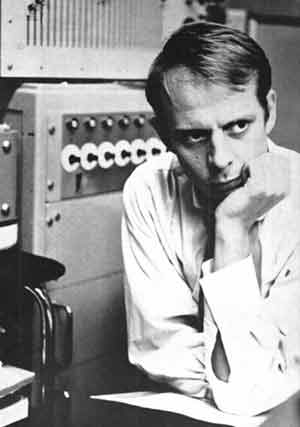
Comrade Stockhausen is Dead!

Lenin once described socialism as workers power and democracy + the electrification of the countryside. Karlheinz Stockhausen was a groundbreaking composer-philosopher of the 20th Century who used electricity to weave some of the most compelling and militant avant-garde sounds of the last 100 years and now the man is dead.

At one time, Stockhausen was named-checked by every Kraftwerk and Bjork listening pseudo-musical intellectual. For me, his electronic collages were the musical counterpart to TS Eliot's "The Wasteland" sketching out a landscape of modern distintergration that surrounded me.

Growing up in a council estate in a small market town meant that visionary and transcendental experience was sought outside of my own limited world of adolescence. Picking up a vox guitar and jacking it into an amplifier I would make weird sounds and try and reach out for something more in life. The screaming howl of feedback mirrored the scream of adolescent rage with a world gone wrong. An idealist I wanted genuine communion with the people and world around me, not experience mediated through some corporate product.

I discovered Stockhausen at around the same time as I hit upon one of his mentors, the brilliant Messaien. Messaien was a maverick French organ player who would construct huge gothic architecture in cathedrals around themes like the fire of Pentacost or the Ressurection of the dead . . . powerful stuff.

Like many young musicians I had my "secret heroes". Stockhausen was someone who taught me to be serious about the gaps in music, he had a concept of "coloured silence" that was incredibly useful. Another pioneer, Arvo Part once said, "that a single note played beautifully could me more important than a symphony" - I went on a quest to find that single note.

Stockhausen advocated a complete rejection of the entire canon of classical music. While such nihilism is ultimately futile and leads to a music that cannot connect to a mass audience it expanded the palate of many a musician and was another arrow in the quiver to use when times got tough.

Stockhausen's reasoning was poignant: He grew up in a world where Beethoven was what SS stormtroopers would listen to for relaxation after closing the oven doors on Jewish families. Classical music became the soundtrack for barbarism.

His father had been an enthusiastic National Socialist who went missing in the brutal war on the Eastern Front. His mother was one of many women forced into an asylum and fell victim to the Nazi's perverted science dying in their euthanasia programme.

Stockhausen described hearing the marching songs of war on the radio-set all through his childhood this scarred him with a lifelong hatred of repetitive, regular rhythms and pushed him out of the black and into the blue.

Whether Stockhausen was a political revolutionary is not important here. The militant socialist composer and one time musical collaborator, Cornelius Cardew, thought not and denounced him. What IS important was that Stockhausen was a musical revolutionary. Like the Kama Sutra his work is more of a manual or textbook than artwork in its own right.

Ultimately, Stockhausen's music was ugly. But as another musical prophet said, "The only beauty's Ugly, man". As a musician I'm still trading on the stamps that Stockhausen gave to me in my youth.

Goodbye, Comrade Stockhausen!

Monday, 8 October 2007

Know Thy Enemy

KNOW THY ENEMY
Christopher Logue

Know thy enemy:
he does not care what colour you are
provided you work for him
and yet you do!

he does not care how much you earn
provided you earn more for him
and yet you do!

he does not care who lives in the room at the top
provided he owns the building
and yet you strive!

he will let you write against him
provided you do not act against him
and yet you write!

he sings the praises of humanity
but knows machines cost more than men.
Bargain with him, he laughs,
and beats you at it;
challenge him, and he kills.
Sooner than loose the things he owns
he will destroy the world.
SMASH CAPITAL NOW!

But as you hasten to be free
And build your commonwealth
Do not forget the enemy
Who lies within yourself.

Friday, 3 August 2007

RESPECT member becomes Children's Laureate!

Cardiff RESPECT congratulates Michael Rosen on becoming Children's Laureate. He received the award at a ceremony in London in June. Rosen is also well known as an author and broadcaster, presenting programmes such as "Word of Mouth" on Radio 4.

The position is awarded every two years to a writer or illustrator of children's books. Judges consider nominations from a range of organisations representing librarians, critics, writers, booksellers and children.

"I utterly resent and reject the notion that you can teach reading without books," he told journalists after his appointment.

"There is a huge push on to create an environment - in nurseries, and reception, and year ones and year twos - where books are secondary to the process of reading. This seems oxymoronic to me. We must, must have at the heart of learning to read the pleasure that is reading. Otherwise why bother? You could learn phonics, learn how to read and then put it behind you and watch telly - you're given no reason to read. There are many ways in which people learn how to read; the idea that there is one way is an outrageous fib.

It's taken a long time for my daughter to bring a picture book home from school because she's been bringing home the Oxford Reading Tree day after day, week after week. The idea that that's what the school provides to children in her class who might not encounter other books horrifies me. We don't care about lists of words. We care about the Gruffalo. So why aren't kids bringing home The Gruffalo?"

Rosen has stated that he will be working with Booktrust, the charity that administers the laureateship, to promote the use of picture books in schools.

The author of more than 140 books, Rosen is best known for his collections of humorous verse for children, and his other commitments during his two-year stint will emphasise verse.

Presenting his ideas under the provisional title Diverse Verse for All, Rosen said that he would like to develop some kind of website, similar to YouTube, where schools could share videos of children performing their poetry. Alongside it would be an online space for poetry discussion; and widening participation in poetry through libraries.

He also intends to create a touring show of performance poetry for kids, Poetry A-Z - "from Agard to Zephaniah," Rosen joked.

He stresses that poetry offers children "another way to deal with reality" and a "portable philosophy" to be carried around, even in just a couple of lines. "It's a great assistance in life," he added.

However, despite being fifth children's laureate, and the first poet to take the honour, Rosen had one confession to make. "I can't find a word to rhyme with laureate," he said, ruefully.

The children's laureateship was the brainchild of Michael Morpurgo and his friend - and then poet laureate - Ted Hughes, although it was not first endowed until 1999, after Hughes's death. The role, which lasts for two years, is awarded to a children's writer or illustrator, to celebrate immense achievement in their field.

RESPECT CALLS FOR -

* A fully comprehensive school system providing a common core curriculum for all until 18. End selection. Scrap SATs and other unnecessary tests.
* Education free at the point of use, from pre-school to FE, to
university and adult learning.
* A radical reduction in class size.
* A qualified teacher for every class.
* Better pay for teachers and other education workers.
* An end to specialist school status, to Academies and to Trust schools.
* Restoration of local decision-making powers over admissions and new schools to elected local authorities, not government-appointed bureaucrats.
* Free after-school clubs and play centres for all that need them.
* Full and part-time nursery and day-care places as a right, for all who want them.
* An end to charitable status and tax breaks for private schools.
* The abolition of tuition fees and student loans. Free education and a living grant for all further and higher education students.
* Free and life-long access for all to high quality vocational education and adult education.* A fully comprehensive school system providing a common core curriculum for all until 18. End selection. Scrap SATs and other unnecessary tests.
* Education free at the point of use, from pre-school to FE, to
university and adult learning.
* A radical reduction in class size.
* A qualified teacher for every class.
* Better pay for teachers and other education workers.
* An end to specialist school status, to Academies and to Trust schools.
* Restoration of local decision-making powers over admissions and new schools to elected local authorities, not government-appointed bureaucrats.
* Free after-school clubs and play centres for all that need them.
* Full and part-time nursery and day-care places as a right, for all who want them.
* An end to charitable status and tax breaks for private schools.
* The abolition of tuition fees and student loans. Free education and a living grant for all further and higher education students.
* Free and life-long access for all to high quality vocational education and adult education.

Monday, 30 July 2007

Socialism proposes the transformation of human beings

Socialism proposes the transformation of human beings into living poems - Octavio Paz, Mexican surrealist

BELLS OF RHYMNEY
(Idris Davies)

Oh what will you give me?
Say the sad bells of Rhymney
Is there hope for the future?
Cry the brown bells of Merthyr.
Who made the mine owner?
Say the black bells of Rhondda.
And who robbed the miner?
Cry the grim bells of Blaina.

They will plunder willy-nilly,
Cry the bells of Caerphilly.
They have fangs, they have teeth,
Say the loud bells of Neath.
Even God is uneasy,
Say the moist bells of Swansea.
And what will you give me?
Say the sad bells of Rhymney
Put the vandals in court
Say the bells of Newport.
All would be well if, if, if,
Cry the green bells of Cardiff.
Why so worried, sisters, why?
Sang the silver bells of Wye.
And what will you give me?
Say the sad bells of Rhymney.

Idris Davies was self-taught. His poetry chronicles the decay and social breakdown of Wales in the 20s and 30s . He began work as a miner after leaving school at the age of 14. The defeat of the General Strike of 1926 (see poem below) broke his spirit. He took a correspondence course and left Wales to become a teacher in England.

As to the bells themselves the bells of Brecon and Wye are off the South Wales coalfield, which meant that they could be happy without the mass unemployment endured by the coalfield to the south. Neath is in the anthracite coalfield of South Wales, which didn't experience the depression of the 20s and 30s so severely. Caerphilly is just off the coalfield. Many miners from Merthyr and Rhymney traveled to pits in the Neath valley at that time. At this time the British government was talking of closing down Merthyr and transporting the people to England- hence the brown bells. This is not a 'song' by miners this is a poem by a great poet who happened to be a miner that expressess a great biterness and hurt.The poem was borrowed by an American singer. Nothing wrong with that.

The miners were called, "the worms of the earth". The poem ends defiantly.

Do you remember 1926? That summer of soups and speeches,
The sunlight on the idle wheels and the deserted crossings,
And the laughter and the cursing in the moonlit streets?
Do you remember 1926? The slogans and the penny concerts,
The jazz-bands and the moorland picnics,
And the slanderous tongues of famous cities?
Do you remember 1926? The great dream and the swift disaster,
The fanatic and the traitor, and more than all,
The bravery of the simple, faithful folk? "
Ay, ay, we remember 1926," said Dai and Shinkin,
As they stood on the kerb in Charing Cross Road, "
And we shall remember 1926 until our blood is dry."

Thursday, 19 July 2007

It's never too late to love - or rebel!

Culture is an important weapon in the struggle for socialism: Socialism is an important weapon in the struggle for culture . . .

"When I was growing up in Pakistan at age 16 or so, I would go to a poetry reading that would start after dinner about 10:30 p.m. and it would be going on when it was time for breakfast. In the morning we were just swaying with the rhythm of the words and the chant would go up from the crowd to recite some extemporary poetry–make it up. The poets would then have a competition. They would decide on a subject and recite poetry. And the audience would judge which one was the best." - Tariq Ali

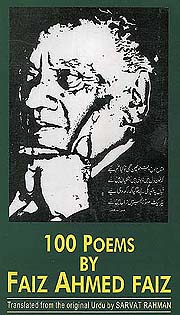
Faiz Ahmad Faiz was a revolutionary, an anti-imperialist and one of the greatest poets to ever walk the earth. He is considered by some to be the national poet of Pakistan and many of his poems have become popular songs. This perhaps his most famous poem begins with a beautiful description of a love affair and infatuation, but the idyll is suddenly interrupted by injustice in the world and the poet declares that he must renounce the cocooon of romantic love for something else.

DON'T ASK ME FOR THAT LOVE AGAIN
Faiz Ahmad Faiz

That which then was ours, my love,
don’t ask me for that love again.

The world then was gold, burnished with light –
and only because of you. That’s what I had believed.
How could one weep for sorrows other than yours?
How could one have any sorrow but the one you gave?
So what were these protests, these rumors of injustice?
A glimpse of your face was evidence of springtime.
The sky, wherever I looked, was nothing but your eyes.
If You’d fall into my arms, Fate would be helpless.

All this I’d thought, all this I’d believed.
But there were other sorrows, comforts other than love.
The rich had cast their spell on history:
dark centuries had been embroidered on brocades and silks.
Bitter threads began to unravel before me
as I went into alleys and in open market
ssaw bodies plastered with ash, bathed in blood.
I saw them sold and bought, again and again.
This too deserves attention. I can’t help but look back
when I return from those alleys –what should one do?
And you still are so ravishing –what should I do?
There are other sorrows in this world,
comforts other than love.

Don’t ask me, my love, for that love again.

Monday, 12 March 2007

I came to the cities in a time of disorder . . .

Respect member, Adam Johannes, sent us this short extract from a poem by socialist playwright and poet Bertolt Brecht, that speaks eloquently about these scoundrel times that we are living through . . .


I came to the cities in a time of disorder
When hunger ruled.
I came among men in a time of uprising
And I revolted with them.
So the time passed away
Which on earth was given me.


I ate my food between massacres.
The shadow of murder lay upon my sleep.
And when I loved, I loved with indifference.
I looked upon nature with impatience.
So the time passed away
Which on earth was given me.

In my time streets led to the quicksand.
Speech betrayed me to the slaughterer.
There was little I could do.
But without me
The rulers would have been more secure. This was my hope.
So the time passed away
Which on earth was given me.


Bertold Brecht, from "To Posterity"