Tuesday, 7 August 2007

Welsh Soldier's death: Rhodri Morgan's silence

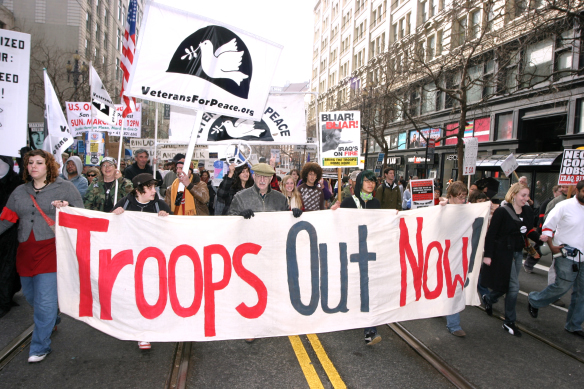
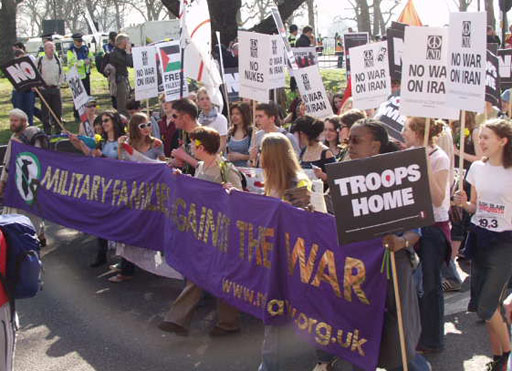
With another Welsh soldier dying in Iraq, anti-war campaigners have angrily accused Rhodri Morgan of failing to represent the people of Wales and are launching a mass campaign to demand that the Assembly Government and the new Labour/Plaid administration take a clear anti-war position and call on the UK government to pull the troops out of Iraq and Afghanistan.

Adam Johannes from Cardiff RESPECT said:

"Another Welsh soldier is coming home from Iraq in a pine-box, yet the Assembly remains silent on the war.

The Mayor of London and the First Minister of Scotland unequivocally oppose the war, yet the First Minister of Wales shamefully refuses to take a position on it.

With more Welsh soldiers fighting and - in some cases - tragically dying in Iraq and Afghanistan it is time for Rhodri Morgan to show some principles and represent the overwhelming majority of Welsh people who want an end to our involvement in foreign wars.

Wales has some of the poorest communities in the UK, yet billions that could have been spent on pensioners, hospitals and eliminating child poverty is being spent on the illegal wars that Rhodri Morgan refuses to oppose.

The Iraq War has now created twice as many refugees as the Darfur crisis. Up to a million people have died joining the million who perished due to the UN administered genocide of sanctions in the 1990s. Half the population live in absolute poverty, while even more are unemployed: You can almost imagine some well-meaning liberal calling for Western intervention - only this is Western intervention"

RESPECT VS. NEW LABOUR

The following debate took place between RESPECT and New Labour AM Jeff Cuthbert, during the Assembly elections, in the Western Mail; after First Minister Rhodri Morgan appealed to voters not to punish him because of New Labour’s role in Iraq -

Anti-War vote has a home on May 3rd


Rhodri Morgan was dead wrong when he suggested that voters who wanted to give Labour a bloody nose for the war in Iraq should wait until the next general election, rather than on May 3.

Perhaps he is still guilt ridden after his shambolic performance on Question Time last year, when he refused to make a commitment either way on the basis that the war "wasn't a Welsh issue".

He should try telling that to Reg Keys in North Wales, who lost a son in Iraq, or the numerous other Welsh families that have lost sons, daughters and loved ones in a needless war.

May 3 would be the ideal date for punishing Rhodri for impersonating a jellyfish on such a crucial issue. The only problem is that the mainstream parties are more interested in bartering for a place in a coalition government and will therefore sidestep any discussion of the war during the Assembly elections.

That is why it is so important that RESPECT is standing in the South Wales West and South Wales Central electoral lists.

RESPECT emerged from the anti- war movement, and stands against the neo-liberal policies of Blair and Brown.

We have played a key role in campaigns against racism and war and in defence of public services and council housing.Those who have voted with their feet and demonstrated against the war in South Wales can now vote at the ballot box for a party that believes the billions of pounds wasted on war should be invested in our hospitals, our schools and our communities.

DES MANNAY, Gwent RESPECT

This shabby tactic will not fool Wales - New Labour responds

I refer to the letter of April 11 from Des Mannay, of RESPECT. He criticises Rhodri Morgan for not stating a view on Iraq.

But it is Mr Mannay and not Rhodri that is at fault.When Rhodri speaks he does so as First Minister (that was certainly the case on Question Time).

It is unfair and unreasonable to hound him to state "personal" opinions.

Someone in Rhodri's position will always be judged as a public figure and not as an individual.

What Mr Mannay and his friends are trying to do is to shift the focus of this election campaign away from the true issues. By that I mean the areas of devolved government that the Assembly is responsible for.

Mr Mannay, and others that use the same tactic, are simply being opportunist.They do this because they know that the record of Welsh Labour is a good one. Our investment in education, healthcare and our communities is huge and has increased markedly over the past few years.

There is no evidence to support Mr Mannay's claim that spending in Wales has suffered because of UK Government actions.

But they do not want to debate the real issues so they switch to issues that they know are outside the scope of the Assembly. This is a shabby tactic and will not fool the people of Wales.

JEFF CUTHBERT, New Labour Assembly Member for Caerphilly

RESPECT stands with all those fighting for a better world

Labour AM Jeff Cuthbert states in his letter of April 13 that RESPECT are wrong to try to suggest that Rhodri Morgan should take a position on the Iraq War in public since it doesn't fall under his remit as First Minister.

The same could be said of Labour's elected Mayor of London, Ken Livingstone, yet he is able to make the war a point of principle - why should things be different for Rhodri?

The fact is that this illegal war has diverted money that could be spent on public services to maintain an occupation that has seen the deaths of hundreds of thousands of Iraqis and thousands of coalition troops.

Mr Cuthbert lauds the Assembly's investment in health and education, seemingly not realising that Labour's slavish devotion to market solutions to social issues has led to much of this investment being frittered away on overpaid management and consultancy. The result? Hospital cuts and massive waiting lists. An excess of school places becomes an excuse to close schools rather than use that excess to drastically cut class sizes.

Rhodri Morgan's slavish devotion to New Labour as opposed to working people has left him sitting idly by while the party is transformed into a party of sleaze, war and big business.

By contrast, RESPECT stands with all those fighting for a better world. This means supporting those who campaign against war and racism; and public service workers fighting to defend our essential services.

It also means supporting the council residents of Swansea who magnificently defeated the privatisation that the Assembly government and city council tried to force on it, or the kids who came out of Cantonian High School to protest against the cuts and closures that have become the hallmark of Labour in Cardiff and Westminster.

JONNY JONES, RESPECT Wales Steering Committee

Friday, 3 August 2007

RESPECT member becomes Children's Laureate!

Cardiff RESPECT congratulates Michael Rosen on becoming Children's Laureate. He received the award at a ceremony in London in June. Rosen is also well known as an author and broadcaster, presenting programmes such as "Word of Mouth" on Radio 4.

The position is awarded every two years to a writer or illustrator of children's books. Judges consider nominations from a range of organisations representing librarians, critics, writers, booksellers and children.

"I utterly resent and reject the notion that you can teach reading without books," he told journalists after his appointment.

"There is a huge push on to create an environment - in nurseries, and reception, and year ones and year twos - where books are secondary to the process of reading. This seems oxymoronic to me. We must, must have at the heart of learning to read the pleasure that is reading. Otherwise why bother? You could learn phonics, learn how to read and then put it behind you and watch telly - you're given no reason to read. There are many ways in which people learn how to read; the idea that there is one way is an outrageous fib.

It's taken a long time for my daughter to bring a picture book home from school because she's been bringing home the Oxford Reading Tree day after day, week after week. The idea that that's what the school provides to children in her class who might not encounter other books horrifies me. We don't care about lists of words. We care about the Gruffalo. So why aren't kids bringing home The Gruffalo?"

Rosen has stated that he will be working with Booktrust, the charity that administers the laureateship, to promote the use of picture books in schools.

The author of more than 140 books, Rosen is best known for his collections of humorous verse for children, and his other commitments during his two-year stint will emphasise verse.

Presenting his ideas under the provisional title Diverse Verse for All, Rosen said that he would like to develop some kind of website, similar to YouTube, where schools could share videos of children performing their poetry. Alongside it would be an online space for poetry discussion; and widening participation in poetry through libraries.

He also intends to create a touring show of performance poetry for kids, Poetry A-Z - "from Agard to Zephaniah," Rosen joked.

He stresses that poetry offers children "another way to deal with reality" and a "portable philosophy" to be carried around, even in just a couple of lines. "It's a great assistance in life," he added.

However, despite being fifth children's laureate, and the first poet to take the honour, Rosen had one confession to make. "I can't find a word to rhyme with laureate," he said, ruefully.

The children's laureateship was the brainchild of Michael Morpurgo and his friend - and then poet laureate - Ted Hughes, although it was not first endowed until 1999, after Hughes's death. The role, which lasts for two years, is awarded to a children's writer or illustrator, to celebrate immense achievement in their field.

RESPECT CALLS FOR -

* A fully comprehensive school system providing a common core curriculum for all until 18. End selection. Scrap SATs and other unnecessary tests.
* Education free at the point of use, from pre-school to FE, to
university and adult learning.
* A radical reduction in class size.
* A qualified teacher for every class.
* Better pay for teachers and other education workers.
* An end to specialist school status, to Academies and to Trust schools.
* Restoration of local decision-making powers over admissions and new schools to elected local authorities, not government-appointed bureaucrats.
* Free after-school clubs and play centres for all that need them.
* Full and part-time nursery and day-care places as a right, for all who want them.
* An end to charitable status and tax breaks for private schools.
* The abolition of tuition fees and student loans. Free education and a living grant for all further and higher education students.
* Free and life-long access for all to high quality vocational education and adult education.* A fully comprehensive school system providing a common core curriculum for all until 18. End selection. Scrap SATs and other unnecessary tests.
* Education free at the point of use, from pre-school to FE, to
university and adult learning.
* A radical reduction in class size.
* A qualified teacher for every class.
* Better pay for teachers and other education workers.
* An end to specialist school status, to Academies and to Trust schools.
* Restoration of local decision-making powers over admissions and new schools to elected local authorities, not government-appointed bureaucrats.
* Free after-school clubs and play centres for all that need them.
* Full and part-time nursery and day-care places as a right, for all who want them.
* An end to charitable status and tax breaks for private schools.
* The abolition of tuition fees and student loans. Free education and a living grant for all further and higher education students.
* Free and life-long access for all to high quality vocational education and adult education.

Tuesday, 31 July 2007

Women - Free to Work Harder

The following article by Lindsey German was printed in today's Guardian.

Lindsey is National Convenor of the UK Stop the War Coalition, RESPECT candidate for London Mayor & Author of "Material Girls: Women, Men & Work"

The women's economic miracle has passed largely unremarked, but increasing numbers of women over the past two decades have contributed more to global economic growth than either new technology or the rapidly industrialising giants of China and India. In the 1970s many of us thought working outside the home would be liberating for women, freeing them from financial dependence on men and allowing them roles beyond those of wife and mother.

It hasn't worked out that way. Women's labour has been bought on the cheap, their working hours have become longer and their family commitments have barely diminished. Yesterday's G2 special investigation into how employers treat parents highlighted companies offering decent maternity packages, but many firms refused to take part, and the question remained whether a woman's career would survive childbirth.

The reality for most working women is a near impossible feat of working ever harder. There have been new opportunities for some women: professions once closed to them, such as law, have opened up. Women managers are commonplace, though the top boardrooms remain male preserves. Professional and managerial women have done well out of neoliberalism. Their salaries allow them to hire domestic help.

But more women face worsening conditions: the supermarket or call centre workers; the cooks, cleaners and hairdressers; all find themselves in low-wage, low-status jobs with no possibility of paying to have their houses cleaned by someone else. Even those in professions once-regarded as reasonably high-status, such as teaching, nursing or office work, have seen that status pushed down with longer hours, more regulation and lower pay.

Inequality is not just between men and women, but increasingly between "top" women and those at the lower levels of wages and conditions. Class divisions between women appear in starker form than they did a generation ago. Indeed, those at the top often rely on the labour of those at the bottom to sustain their lifestyles.

Role models such as cabinet ministers Yvette Cooper (three children) or Ruth Kelly (four) do not face the problems of most working women. They receive salaries of three or four times the average female wage, have far longer holidays, access to drivers and other benefits. Estimates have put the cost of employing a nanny at £35,000 a year. Even the cost of a full-time nursery place, at £10,000 a year in London, is close to many women's annual wage.

Women's right to work should not mean a family life where partners rarely see each other or their children. Yet a quarter of all families with dependent children have one parent working nights or evenings, many of them because of childcare problems.

The legislative changes of the 1960s and 1970s helped establish women's legal and financial independence, but we have long come up against the limits of the law. A more radical social transformation would mean using the country's wealth - much of it now produced by women - to create a decent family life. A 35-hour week and a national childcare service would be a start.

It is hard to imagine the major employers conceding such demands. Every gain that women have made at work has had to be fought for.

Women's lives have undergone a revolution over the past few decades that has seen married women, and mothers in particular, go from a private family role to a much more social role at work. But they haven't left the family role behind: now they are expected to work even harder to do both.

Monday, 30 July 2007

Socialism proposes the transformation of human beings

Socialism proposes the transformation of human beings into living poems - Octavio Paz, Mexican surrealist

BELLS OF RHYMNEY
(Idris Davies)

Oh what will you give me?
Say the sad bells of Rhymney
Is there hope for the future?
Cry the brown bells of Merthyr.
Who made the mine owner?
Say the black bells of Rhondda.
And who robbed the miner?
Cry the grim bells of Blaina.

They will plunder willy-nilly,
Cry the bells of Caerphilly.
They have fangs, they have teeth,
Say the loud bells of Neath.
Even God is uneasy,
Say the moist bells of Swansea.
And what will you give me?
Say the sad bells of Rhymney
Put the vandals in court
Say the bells of Newport.
All would be well if, if, if,
Cry the green bells of Cardiff.
Why so worried, sisters, why?
Sang the silver bells of Wye.
And what will you give me?
Say the sad bells of Rhymney.

Idris Davies was self-taught. His poetry chronicles the decay and social breakdown of Wales in the 20s and 30s . He began work as a miner after leaving school at the age of 14. The defeat of the General Strike of 1926 (see poem below) broke his spirit. He took a correspondence course and left Wales to become a teacher in England.

As to the bells themselves the bells of Brecon and Wye are off the South Wales coalfield, which meant that they could be happy without the mass unemployment endured by the coalfield to the south. Neath is in the anthracite coalfield of South Wales, which didn't experience the depression of the 20s and 30s so severely. Caerphilly is just off the coalfield. Many miners from Merthyr and Rhymney traveled to pits in the Neath valley at that time. At this time the British government was talking of closing down Merthyr and transporting the people to England- hence the brown bells. This is not a 'song' by miners this is a poem by a great poet who happened to be a miner that expressess a great biterness and hurt.The poem was borrowed by an American singer. Nothing wrong with that.

The miners were called, "the worms of the earth". The poem ends defiantly.

Do you remember 1926? That summer of soups and speeches,
The sunlight on the idle wheels and the deserted crossings,
And the laughter and the cursing in the moonlit streets?
Do you remember 1926? The slogans and the penny concerts,
The jazz-bands and the moorland picnics,
And the slanderous tongues of famous cities?
Do you remember 1926? The great dream and the swift disaster,
The fanatic and the traitor, and more than all,
The bravery of the simple, faithful folk? "
Ay, ay, we remember 1926," said Dai and Shinkin,
As they stood on the kerb in Charing Cross Road, "
And we shall remember 1926 until our blood is dry."

Friday, 27 July 2007

Solidarity with the Posties!

As Postal workers enter their third bout of strike action, many pickets lines have seen solidarity visits from other workers.

Karen Tyre, who was a RESPECT candidate in May and is a Unison union steward in the Vale of Glamorgan council took some muffins down to the picket line at the mail centre in Cardiff.

She told RESPECT,

“The pickets were very positive. I was very warmly welcomed and we discussed the need for united action across the public sector.

I have done two collections round my building which I have taken to different post workers. The second collection I did was for the counter workers who work in the post office next to the office where I work. I spoke to them in the morning and they seemed a bit down about the dispute, so I took a petition and collection around my office – most people gave money – and took it back that evening. It was a real boost for the post workers.

The collections boost the post workers’ morale, but its also been really good for people in my office to feel part of the fight back. We have our own issues in the council so it has been good to build links.”

George Galloway IS Spartacus!


At last a politician has been suspended for their role over the Iraq War. You'd have thought it would have happened before now, and you might have thought when it happened, it wouldn't be the politician most prominently against the war!

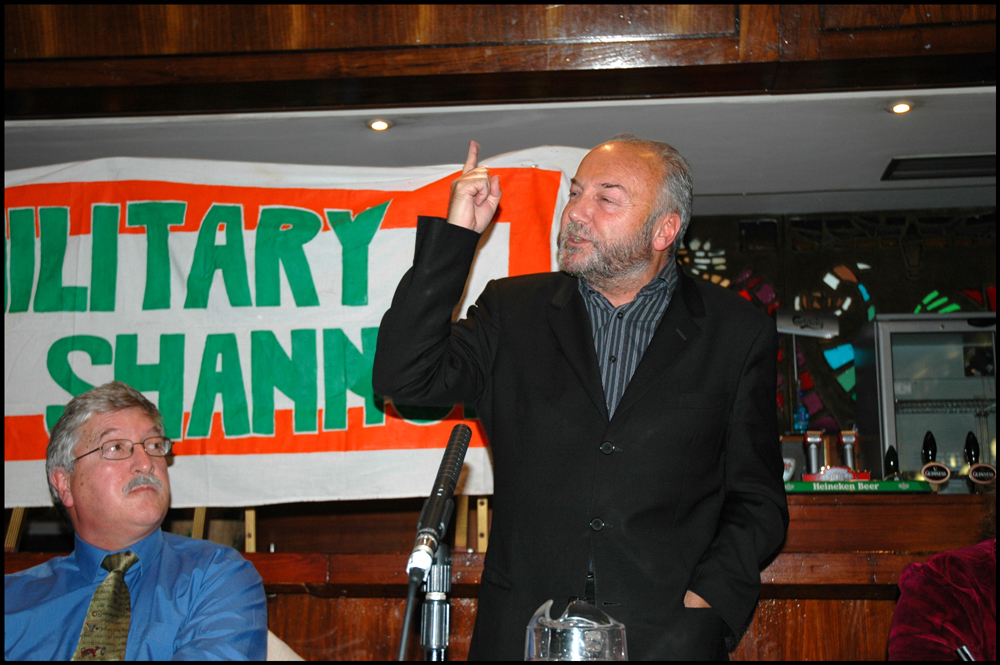
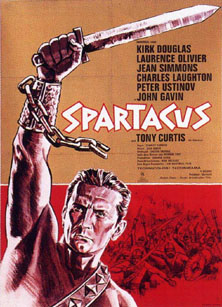
Galloway cites Spartacus, the ultimate heroic tale of the oppressed underdog rising up to glory, as his favourite film. "It has inspired me," he says with hushed reverence for the story of Kirk Douglas as the slave who takes on the Roman Empire. "Its message is that to be right, rather than to be popular, is what counts. I am moved by the scene where all of the slaves stand up and say 'I am Spartacus' to protect him - although under New Labour it would be: 'He is Spartacus.'"

George Galloway MP writes:

"Once more and yet again I have been cleared of taking a single penny or in any way personally benefiting from the former Iraqi regime through the Oil for Food programme or any other means.

The Commissioner's report states that unequivocally no less than six times. The Commissioner further states that it would be a "travesty" to describe me as a "paid mouth-piece" and that my actions on Iraq stemmed from "deep conviction."

This is therefore an argument about the funding of a political campaign to lift non-military sanctions on Iraq, which killed one million people, and to stop the rush to a war which has cost the lives of hundreds of thousands more.

The Committee appear utterly oblivious to the grotesque irony of a pro-sanctions and pro-war Committee of a pro-sanctions and pro-war Parliament passing judgment on the work of their opponents, especially in the light of the bloody march of events in Iraq since this inquiry began four years ago.

They describe that as questioning their integrity and bringing Parliament into disrepute. The House would do well to honestly calibrate exactly how its reputation on all matters concerning the war in Iraq stands with the public before deciding who precisely has brought it into disrepute.

After a four year inquiry – costing a fortune in public funds – the report asks me to apologise for not registering consistently the Mariam Appeal I established (the Commissioner concedes that I did so, but randomly) and for using House of Commons resources allocated to me to campaign against the policies of those now sitting in judgment on me.

The Committee of MPs acknowledges that "had these been the only matters before us, we would have confined ourselves to seeking an apology to the House."

However, in a surprisingly thin-skinned rejoinder, the MPs complain that because I questioned their impartiality and made trenchant criticisms of evidence and witnesses (which, incidentally, they don’t attempt to refute in most cases) I am to be suspended for 18 days.

I reiterate that the Commissioner is right to state that he found no evidence that I benefited personally in any way from any Iraqi monies and moreover I never asked any of the Mariam Appeal's donors – the King of Saudi Arabia, the Emir of UAE, or Fawaz Zureikat, the chairman of the Appeal – from where they earned the wealth from which they made donations to a campaign to end sanctions and war."
For a point-by-point refutation of the commission, see: http://www.socialistworker.co.uk/art.php?id=12487

Friday, 20 July 2007

New Labour plays the race card in Wales - AGAIN!

Penny Matthews was recently elected Labour councillor for the Llansamlet ward of Swansea, unfortunately in her election literature rather than give real solutions to the problems her constituents face she whipped up racism.

Up to half a million Roma perished during the holocaust. Yet racism towards Roma and traveller people is still deemed acceptable. It is disheartening to read that New Labour in Wales has once again played the race card. In 2004, Labour issued racist leaflets in Llanederyn and Pentwyn areas of Cardiff attacking Roma people. In 2005, Labour issued racist leaflets in Cardiff Central attacking asylum seekers.

RESPECT aims to fight the racist poison and provide genuine solutions to the problems that working people face. We express full solidarity with the Roma and traveller people in Swansea and wish them well.

From the Western Mail:

"THE Labour Party has been told a poster campaign about Gypsy travellers during a council by-election campaign may have breached race relation laws.

The Commission for Racial Equality has made a formal complaint to Welsh Labour after the distribution of a leaflet in the Llansamlet area of Swansea, where a by-election takes place next Thursday.

The leaflet, which includes photographs of Swansea East MP Sian James and the constituency’s AM Val Lloyd, is headed,

“Council Bye [sic] Election referendum on gipsy site”.It goes on to say, “Many commentators see this current bye election as a referendum on the gypsy encampment on Swansea Vale.With the Labour Party commitment to getting the site removed and the Liberal Democrat, Independent alliance (kept in power by the Conservatives and Plaid Cymru) unwilling to take the necessary action to remove it [sic].

Every vote Labour gets in the bye election will add strength to the resolve to remove this site on council land.

“Vote Labour. Vote to remove the illegal travellers site.”

Thursday, 19 July 2007

It's never too late to love - or rebel!

Culture is an important weapon in the struggle for socialism: Socialism is an important weapon in the struggle for culture . . .

"When I was growing up in Pakistan at age 16 or so, I would go to a poetry reading that would start after dinner about 10:30 p.m. and it would be going on when it was time for breakfast. In the morning we were just swaying with the rhythm of the words and the chant would go up from the crowd to recite some extemporary poetry–make it up. The poets would then have a competition. They would decide on a subject and recite poetry. And the audience would judge which one was the best." - Tariq Ali

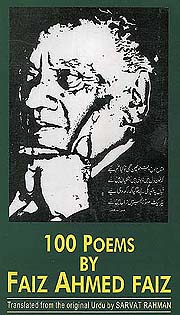
Faiz Ahmad Faiz was a revolutionary, an anti-imperialist and one of the greatest poets to ever walk the earth. He is considered by some to be the national poet of Pakistan and many of his poems have become popular songs. This perhaps his most famous poem begins with a beautiful description of a love affair and infatuation, but the idyll is suddenly interrupted by injustice in the world and the poet declares that he must renounce the cocooon of romantic love for something else.

DON'T ASK ME FOR THAT LOVE AGAIN
Faiz Ahmad Faiz

That which then was ours, my love,
don’t ask me for that love again.

The world then was gold, burnished with light –
and only because of you. That’s what I had believed.
How could one weep for sorrows other than yours?
How could one have any sorrow but the one you gave?
So what were these protests, these rumors of injustice?
A glimpse of your face was evidence of springtime.
The sky, wherever I looked, was nothing but your eyes.
If You’d fall into my arms, Fate would be helpless.

All this I’d thought, all this I’d believed.
But there were other sorrows, comforts other than love.
The rich had cast their spell on history:
dark centuries had been embroidered on brocades and silks.
Bitter threads began to unravel before me
as I went into alleys and in open market
ssaw bodies plastered with ash, bathed in blood.
I saw them sold and bought, again and again.
This too deserves attention. I can’t help but look back
when I return from those alleys –what should one do?
And you still are so ravishing –what should I do?
There are other sorrows in this world,
comforts other than love.

Don’t ask me, my love, for that love again.

Support School Staff: Term Time Pay - No Way!

UNISON members in Cardiff are campaigning for the fair and equal treatment of ALL staff working in schools. RESPECT supports this campaign 110% and will be doing everything we can to publicise it!
Sign the petition here:

(From UNISON website)

DID YOU KNOW:

Support staff make up around 50% of all employees in Cardiff Schools.

Like teachers, they work term time and take their holidays during the school holidays. Unlike teachers, many don’t get paid for the full year.

School support staff are not in ‘part time’ jobs – so how is justified that they get part time pay?

WHAT WE ARE FIGHTING FOR:

* Equality for all school staff and an end to term time only pay, which means;
* Paid 52 week contracts
* Fair pension entitlement
* Full week = full time status
* A maximised number of paid hours and weeks
* Tackling low and unequal pay and achieving proper levels of reward and career opportunities.

HOW CAN YOU SUPPORT US ?

This is a new campaign but already we are building popular levels of support in Cardiff and nationally within UNISON. On top of organised general meetings for all school members, over 60 UNISON members are now signed up as contacts in their school to receive regular information. The campaign is being co-ordinated by UNISON officers, the UNISON Cardiff schools convenor, stewards and school support staff members who make up a campaign steering committee.

SOME COMMENTS FROM UNISON'S PETITION:

"Schools work as teams. All staff contracts should be on similar terms and conditions. 52-week contracts for teachers should mean the same for all support staff. That comes from a teacher. The inequality must stop now!"

"Second class employees First class workers"

"Equality for all"

"I have worked for 20 years in the school but my pension is worked out as 13 years due to being paid for 38 weeks instead of 52."

"Under valued and under paid!"

"Term time workers are just as important as the rest so stop treating them like their not. Equality for all workers now."

"This system discriminates against people ( mainly women) who make a valuable contribution to our children's education, and hence our society. They should be paid in the same way as teachers who they work alongside every day.UNISON is working to end this unequal treatment."

Thursday, 12 July 2007

Smash the Pay Freeze

This is going to be a very important meeting in Cardiff for all those who want to support the workers striking against Gordon Brown's pay-freeze.
Let's make sure it's a success and take in the argument that joint action between PCS, CWU and other unions can beat New Labour and increase the confidence of workers all over Britain to fight back against neoliberalism...

Cardiff County Trades Union Council Public Meeting
Defending Public Services, Defending Public Sector Jobs

Tuesday 17th July 2007
Sandringham Hotel
St. Mary Street
Cardiff

Commencing at 7.30p.m.

Confirmed Speakers
John McInally PCS, National Executive Member
Alex Gordon, RMT Member of Council of Executives
Jane Loftus, CWU, President

At a time when workers are feeling under severe pressure and attack, come and debate with those who are leading the fight to save our public services and to defend the jobs of public service workers.

All are welcome - Please support

Monday, 2 July 2007

Building a labour movement conference on Climate Change

Recently in the Western Mail, a leading Welsh trade unionist attacked the leader of the Welsh Tories for calling on the Welsh Assembly to adopt carbon reduction targets. There are many good reasons for attacking the Tories, but this wasn't a valid one! The trade unionist argued that cutting emissions would adversely effect jobs. We believe that this man is not fit to call himself a trade unionist having forgotten basic principles of internationalism and solidarity: Climate change will effect working class and poor people the worst. While UNISON, at a national level, now supports climate activism, the trade union movement has been incredibly backward in taking up this issue. Hopefully this conference will help improve the situation! Please send this info. to all concerned trade unionists

Dear Brothers and Sisters,

At the recent Campaign Against Climate Change International conference there was a workshop for trade unionists addressed by Cllr Rania Khan from Tower Hamlets, Tony Staunton from Plymouth UNISON and East London NUT activist Andy Stone.

Inspired by an excellent session there was enthusiastic support for a much wider network of trade unionists to coordinate work on these issues in UK workplaces.

We agreed an initial aim of organising a Labour Movement Conference on Climate Change for February 2008. I volunteered to coordinate this. So I am now writing to you for two reasons.

1. There will be an open planning meeting for this conference in Birmingham on Saturday 14 July. The venue is Carrs Lane Church, Carrs Lane, Birmingham City Centre (directions below), and the start time is 12.45pm. Please do all you can to publicise this meeting amongst your union friends and comrades.We will need to take decisions on the venue, budget, structure and publicity for the February event at this meeting. If you are planning to attend this meeting in Birmingham please let me know by email as soon as possible.

2. In order to get some publicity for this conference and the work of this group we want to get a first leaflet printed for circulation amongst trade unionists as soon as possible. I am therefore asking for signatories from interested trade unionists to be listed on this leaflet. All will be in a personal capacity, unless otherwise indicated. Can you please get these back to me by Friday 22nd June so that we can get a leaflet out in good time. Bob Crow (General Secretary RMT) has kindly agreed to add his name to the conference in order to get the ball rolling.

In solidarity,

Roy Wilkes
4 Oakhurst Gardens,
Prestwich
Manchester
M25 1JQ

Phone: 0161 773 8699
Mobile: 07801 263 265
E-mail: roywilkes59@talktalk. net

Stop the Cardiff Bay Incinerator

LIB DEM COUNCIL TO APPROVE INCINERATOR?

Members of Butetown RESPECT report that it looks likely that the LibDem mafia who run Cardiff Council will approve plans by two corporations to build a massive incinerator in Cardiff Bay. The incinerator will collect rubbish from across South Wales and sabotage efforts to increase recycling and composting. RESPECT believes that waste should be dealt with in the areas where it is produced rather than being transported across Wales and increasing our carbon footprint.

NO TO INCINERATORS!

RESPECT says no to incinerators, the aim should be the full recycling of waste: In Flanders, local government recycles and composts over two-thirds of waste, in Cardiff, the LibDems manage only 12%. Incineration involves burning paper and plastics that should be recycled. Contrary to myth this does not generate renewable energy because most of the fuel comes from plastics which are made from oil. RESPECT campaigns for a rapid transition to a non-fossil fuel based, low carbon economy.

INCINERATORS LEAD TO MORE POLLUTION

Stopping the Cardiff Incinerator will be a blow against the government and for the planet: New Labour claims it wants to use incinerators as a “green” way to deal with the amount of waste produced in Britain. An environment white paper due to be published next month suggests that the proportion of burned waste could rise from 9 percent to 25 percent in the next 15 years.

It urges making “energy from waste”, a process in which incinerators are used to power electricity generation plants. But incinerators are extremely inefficient generators of energy, producing more carbon dioxide per unit of energy than a coal-fired power station.

This will increase the threat of global warming as well as putting the health of those who live near incinerators at risk.

REPORTS FROM UK ANTI-INCINERATOR CONFERENCE

RESPECT members in South Wales attended the UK anti-incinerator conference last year.

A representative of the Guildford anti-incinerator campaign in Surrey said, “We need to link all the disparate campaigns around Britain. Even if you stop one particular incinerator the real aim must be to make the government think again about how we deal with the waste we produce. And about how we produce the energy we need in a sustainable way.”

Around 9 percent of municipal waste in England is currently incinerated, with the West Midlands burning the most, sending 31 percent of the region’s waste to incinerators.

Around 72 percent of waste is currently sent to landfill sites, but incinerators are not the answer to reducing this figure. Incinerator operators need a constant level of waste in order to keep the fires burning. To meet this demand local authorities abandon recycling and waste reduction plans.

But the main concern surrounds pollutants found in the ash left in the incinerator and emitted from the chimney. These include dioxins, acid gases, nitrogen oxide, heavy metals and particulates. These are suspected of causing cancer.

Although most incinerators in Britain are used to generate electricity, it does not save energy in the long run because the waste is not recycled. This means more raw materials have to be produced to replace the burnt material.

RESPECT ACTIVISTS IN WALES LEAD FIGHT BACK

RESPECT member Huw Pudner was one of the founders of the Stop The Incinerator Campaign which was set up to oppose the incinerator in Neath, South Wales.

Huw said, “The company running the Crymlyn Burrows giant incinerator and waste treatment plant has gone bankrupt.

This is only the latest sorry chapter in a long running saga of political and environmental incompetence involving the Neath Port Talbot council and its private partners HLC which was responsible for the running of the plant. It has gone bust owing some £40 million.

Ever since the plant was proposed six years ago it has run into a storm of protest from residents and environmentalists. The incinerator has been a fiasco. It was unloved, unwanted and an affront to those who have to live in its shadow.

Before it was officially opened it was destroyed by fire and it has contaminated local houses and the nearby beach. Now the company that runs it has gone to the wall.

The Neath branch of RESPECT believes that it should be closed down permanently and its workers employed on environmental projects in the area.”

HEALTH RISK

According to Dr Jerry Thompson ,an activist from the Slough anti-incinerator campaign in Buckinghamshire, their are huge health risks associated with incinerators:

“The report on the Sint Niklaas incinerator in Belgium is the only complete study ever done on incinerators.

Although the proposed incinerator at Colnbrook in this area will have a lower dioxin output than that at Sint Niklaas, the fact that it would be nine times larger, will emit higher volumes of particulates and will foolishly be allowed to incinerate radioactive material gives little cause for comfort.

Children are more vulnerable to the pollutants produced by incinerators, breathing in more air than adults relative to their size, and are likely to be the first to suffer from adverse effects. The foetus and newborn are uniquely vulnerable.

The report on the Sint Niklaas incinerator showed that blood and glandular cancers appeared in children about five years after the incinerator started operating. This preceded the increase in adult cancers by seven years. Adults cancers showed a five-fold increase over 20 years.

The Sint Niklaas study also showed an excess of autism, hyperactivity, allergies, asthma, repeated infections and congenital defects.”

Sunday, 1 July 2007

Immigrant Workers: Police Harrassment in Cardiff

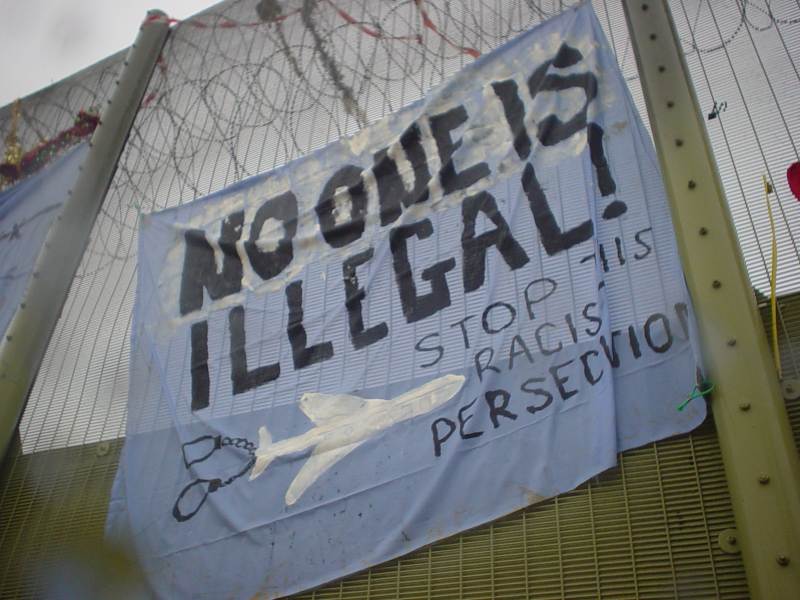
RESPECT members in Cardiff have reacted with disgust and anger to the news that fellow workers are being harrased by the home office and demand the immediate release and right to work of 5 arrested immigrant workers described as "illegal".

Adam Johannes, a clerical worker and member of Roath RESPECT who saw the operation first hand commented:

"Why should it be classified as illegal to come to Cardiff from another country to find work and seek a better life?

The UK state and their media demonise asylum seekers and economic refugees, but surely the real enemy of working people is the top 10% of the population who own two-thirds of the wealth in this country and are making us work the longest hours for the worst pay in Western Europe?

The wealthy will move to whichever country gives them the biggest tax break, but working people face discrimination, imprisonment and deportation.

It is vital that trade unionists, anti-capitalists and the organised labour movement defend immigrant workers and challenge racism: No one is illegal".

On Friday, the police sealed off both ends of Caroline Street (popularly known as Chip Alley) shutting down the street for half an hour as immigration and border authorities raided local fast food outlets. They bullied and harrased workers in the late night kebab and chip shops demanding passports and proof of status. 5 workers were taken away.

Postal Workers on Strike! Smash the Pay Freeze!

In the hot summer of 2004 we launched our coalition, RESPECT.
At that time, the CWU in South East Wales voted to support us in the European Elections.
On Friday, RESPECT members in the postal service joined other workers in a strike against Gordon Brown's attempt to impose a pay freeze on workers across the public sector.
Many other RESPECT members also visited picket lines in solidarity and collected donations at their workplaces for striking postal workers.

This follows strike action by workers in the PCS and other unions on the same issue. Mark Serwotka, General Secretary of the PCS and a member of RESPECT's National Council has been pushing for different unions to strike together on the same day. It is rumoured that he has written 5 times to Billy Hayes, the leader of the CWU with the proposal that they co-ordinate strike actions and not received even a reply.

It seems that Labour Party member, Billy Hayes, places loyalty to his discredited party over the interests of CWU members and working people as a whole. RESPECT members are organising at the grassroots to put pressure on the union bureaucracies to co-ordinate strike action to smash Gordon Brown's pay freeze.

Jonny Jones from Splott RESPECT in Cardiff visited picket lines to show solidarity, he writes:

"From the Post Office in the Mumbles to the massive sorting office in Cardiff, the CWU picket lines in South Wales were friendly and very determined to win their dispute.

There were around a dozen pickets at the main sorting office in Swansea, most of whom were very glad to see Respect supporters on the picket line. One picket joked that there were more teachers than posties!

In Cardiff the strike was almost completely solid. One picket said that only one person had gone in and that we should feel free to print his name in bold.

AJ Singh of Cardiff CWU said, “If Alan Leighton wants dignity and respect in the postal service then he needs to show some dignity and respect by paying staff properly and not eroding their working conditions”.

Strikers talked about the possibility of joint action with the PCS and will be working with PCS members to set up a joint union meeting on how best to beat Gordon Brown’s pay freeze."

Sunday, 10 June 2007

Battle Stations: CWU vote for Strike!


Over 77 per cent of members who voted in the Communication Workers Union (CWU) ballot this past week have voted in favour of taking industrial action over Gordon Brown's pay freeze.

The ballot result reflects the massive anger and growing disillusionment among postal workers not only over Gordon Brown's pay offer of 2.5%, which compared to the latest inflation figures of 4.5% is effectively a pay cut, but also privatisation of the postal service and an increasingly aggressive management.


With a turnout of 67% and an overwhelming majority for strike action, it also signals an imminent set-piece battle between the CWU and Royal Mail.

Jane Loftus, a member of RESPECT, soon to be President of CWU, said "This is a brilliant result which shows that all sections of the postal workforce have defied intense pressure from management and shown their faith in the union."

The mood in the country is for united action, and RESPECT encourages this unity. The Public and Commercial Services Union (PCS) has a policy of joining forces with other public sector unions calling for industrial action, and Mark Serwotka, General Secretary of PCS (& member of RESPECTs National Council) has written to the CWU to express his solidarity.

There should be no mistake that Management will do everything in their power to undermine CWU efforts and undercut support for a strike.

RESPECT members and supporters need to be ready to build solidarity and provide whatever support is needed by CWU members, including spreading information about the vote, inviting CWU activists to address RESPECT meetings and building on opportunities for united action on this issue.

RESPECT congratulates the CWU and expresses its full support for any industrial action that takes place.

Urgent! Solidarity with Iraqi Workers

The following was issued as a press release by Naftana, an independent UK-based committee supporting democratic trade unionism in Iraq. The leader of the Basra Oil Workers' Union spoke powerfully at the Stop the War Coalition's UK conference against the occupation and privatisation two years ago.

Iraq's powerful oil workers' trade union today expressed alarm as an arrest warrant was issued for its leaders, in an attempt to clamp down on industrial action.

Members of the union have been on strike since Monday 4th June, in protest at the government's failure to meet any of its promises made in a meeting with Prime Minister Nouri al-Maliki on 16th May.

The union's 16 demands included improvements to wages, health and other working and living conditions as well as consultation on the proposed oil law, which the union opposes.

The union added a 17th demand yesterday demanding the sacking of the General Manager of the Southern Pipeline Company.

On Tuesday, al-Maliki warned that he would meet threats to oil production "with an iron fist". The arrest warrant, based on a charge of "sabotaging the economy" specifically names Hassan Juma'a Awad, the leader of the 26,000-strong Federation of Oil Unions, and three other leaders of the Federation.

Hassan Juma'a commented, "the government is intimidating the union but we are determined to gain our legitimate rights." He added that the strike would continue in accordance with the union's plan.

The strike entered its third day today and is in its "second phase," which now includes the closure of the main distribution pipelines, including supplies to Baghdad. "Phase one" closed some of the smaller distribution pipelines. Phases one and two did not include production and exports.

The union is calling on all its supporters and unions across the world to back the union at this critical juncture. Sami Ramadani from the union's UK-based support committee, Naftana said: "Issuing a warrant for the arrest of the oil workers' leaders is an outrageous attack on trade union and democratic freedoms."

For further information contact:

Sami Ramadani – 07863 138748
sami.ramadani@londonmet.ac.uk
Kamil Mahdi –
k.a.mahdi@exeter.ac.uk

Sabah Jawad – 07985 336886
sabah.jawad@idao.org

Naftana works in solidarity with the IFOU. It strives to publicize the union's struggle for Iraqi social and economic rights and its stand against the privatisation of Iraqi oil demanded by the occupying powers. For more information see the IFOU's website www.basraoilunion.org

Tuesday, 29 May 2007

40th Anniversary of Occupation of West Bank, Gaza & East Jerusalem

ENOUGH!
END THE OCCUPATION OF PALESTINE!
FREE PALESTINE!
MAKE A STAND - Say NO to occupation

Cardiff demonstration marking the 40th anniversary of the Israeli occupation of the West Bank, Gaza Strip and East Jerusalem calling for its' END

Tuesday 5 June at 5.30 pm
Aneurin Bevan Statue
Queens Street
Cardiff

With music, speakers and dance to raise awareness and call for the END of this brutal occupation.

PLEASE COME BRING YR FRIENDS, BANNERS, PLACARDS etc.
If you are able to lend a PA system for use outdoors please email me.
If you want to travel with us to the big ENOUGH! occupation demonstration in London on Saturday 9 June, email flas6eeny@hotmail.com or eisoj@care2.com

(www.enoughoccupation.org)

Ghaith Nassar
Palestinian Solidarity Society
Cardiff University
flas6eeny@hotmail.com

RESPECT is proud to be the only political party in the UK that has a commitment to opposing apartheid Israel and support for the people of Palestine in its' founding statement and constitution
.

Saturday, 5 May 2007

Lessons from the Past - The Asian Youth Movement


This election saw the biggest ever attempt by the fascists to gain a foothold in Wales. Fortunately, they failed to get a single candidate elected. We reproduce, to start a debate on how we fight racism and fascism in Wales, this thoughtful article by Tariq Mehmood, written when the media and politicians united to condemn all those involved in the disturbances in Oldham, Burnley and Bradford, Tariq Mehmood asks us to learn from 1980s experiences of fighting racism and fascism -- and for black and white to defend their communities together.

Twenty years ago, on 11 July 1981, many British cities were ablaze with youthful rebellion. Then, as now, the fascists were out holding marches and meetings and creating mayhem in black areas. Unlike their present showing in general elections, then they were trounced.

The media -- joined by an assortment of odds and sods presented as "community leaders" -- then as now in Oldham, Burnley and Bradford, condemned the Asian youth of the 1980s as the perpetrators of criminal activity and "mindless thugs", bent on wanton destruction. Some of the middle-aged "community leaders" today, including MPs such as Marsha Singh, were themselves youths at that time, and were engaged in activities not dissimilar to those they are condemning today. I went on many a demonstration with Marsha Singh, chanting "Labour-Tory both the same -- both play the racist game!"

Bradford city has always had a proud history of resistance to racist and fascist provocation. There are uncanny similarities between the present situation in northern England and the conditions 20 years ago, which led to myself and 11 other Asian youths being arrested and imprisoned on charges of conspiracy and possession of explosive substances. In the mid-1970s, the fascists threatened to march through Manningham. Thousands of people in Bradford demonstrated peacefully and ended up in a rally in the city centre. Unlike now, the police then tried to keep the youths in the city centre, so that the fascists could have their rally in the heart of Manningham. The youths broke through the police lines and rushed up Lumb Lane to defend Manningham from fascism. There then ensued terrible violence in which the police fought pitched battles against the youths.

The youth of that time was forced to learn there was no other course than self-organisation. But in order to organise, we had to learn about the nature of the enemy we were organising against. We were forced to try to understand what racism was.

We knew of its devastating effects in our own lives. Our parents worked in dirty run-down mills, we lived in ghettos and had few prospects in front of us. White gangs were attacking us, but why? At school we were embroiled in battles against racist youth and racism within the educational system. But what was racism and from where did it spring?

We came to understand racism was an ideology used in various ways to portray us -- that is, black people -- as sub-human. Sometimes it was used to divide us as workers in the factories and mills, sometimes racism meant we became a political football, kicked about by both Labour and the Tories. There were many expressions of racism in our day-to-day existence. We began to understand that it had a base in history and did not arise simply because we were now here in this country.

We began to ask why had we come into this country in the first place? This led us to our own histories. We learnt that contrary to what the history books had taught us, the British came to India and Africa not primarily on humanitarian missions, but to rob and pillage. This was the major cause of the poverty of our countries of origin. It is here we learnt of capitalism as a system, and racism as an ideology that had developed, changing with the changing times to the present era in which we came of youthful age in Bradford. And it was now being used by neo-fascist organisations.

Following the riots of 1976, Bradford's Asian youth formed themselves into the Asian Youth Movement (AYM). The AYM then spent many years in not only helping young people organise, but also building unity among wider sections of the population. It united with all manner of oppressed layers of British society. One of the alarming developments of the present situation in Bradford, Burnley and Oldham is that there has been a dearth of organised progressive voices.

In the 1970s and 1980s there was a broad abhorrence of fascism in the British populace.

Hundreds, if not thousands, of anti-fascists always met just a handful of fascists whenever they showed themselves. I was in my mid-twenties and had learnt through bitter street experience that the major problem was not the fascist gangs, but racism, the oxygen that fascism needed to feed on. I grew up in Bradford, and was quickly forced to learn, even at school -- especially in view of the terrible racist violence of the playground and the journeys to and from school -- that black minorities in this country had no choice but to organise to defend themselves, and then seek alliances with progressive white people.

We saw black and white as political colours. While trying to forge unity among Afro-Asian youth, at the same time we actively encouraged white youth to work with us, as we believed the necessity of uniting all people against common enemies. Racism, we believed, was a common enemy not only of black people, but of all people. But we also believed that our primary task was to organise ourselves, as we were the direct targets of racist and fascist gangs.

The youth of today need to look to their immediate histories, as we did in our time, and learn from the experiences of those who had organised before us. In the late 1970's, Asian youth formed organisations in almost all the cities in which they lived. I was involved in the formation and activities of a number of these organisations, in places such as the East End, Southall, Birmingham and Bradford. The objective of the youth then was not in fighting against white people, but against racism. The fight was born out of poverty and degradation, of being effectively imprisoned in the inner-city ghetto, with no apparent hope of escape. We too were faced with similar situations, and had no choice but to come together and organise. When we organised we became stronger. By uniting ourselves, we were gaining a public voice. We developed systems in which we could quickly mobilise to defend people under physical attack, while at the same time challenging publications in the media that tried to denigrate our communities or organisations.

When people begin to organise, the state agencies do not just sit by as idle observers. It is not in their interest to allow the independent development of militant organisations.

Following the rebellion of 1981, the state moved quickly to buy off the leadership of the emerging youth movements. We were offered youth workers. We argued that we did not want youth workers but work. The most active and effective time of these youth organisations was when we funded our activities from the money we raised ourselves. As soon as we applied for funding and received it, our organisations began to decay and eventually die. By getting money from state institutions, we became answerable to them. As soon as they controlled our purse strings they controlled us. The lesson from that time is that people's organisations must be responsible only to the people.

Even though the gangs that attacked us in the mid-1980s were coming from run-down white working-class neighbourhoods, we believed that without white workers and progressive white people coming out against racism, we stood no chance. Unlike now, 20 years earlier, especially in towns like Burnley, there were many popular organisations all fighting for their particular demands, such as trade unions, left organisations, tenants associations, women's organisations and even Labour Party members, who took part in anti-racist activities. Those who fight for their own rights learn the meaning of the suffering of others and can see the logic in forging unity.

Situations like this create the conditions for the building of effective anti-racist unity. Following racist violence, our areas became flooded with well-meaning white comrades from different white left organisations. They wanted to organise against racism and pick up a few members along the way. We pleaded with them to go and organise in white areas where the racists live and people are in need of education and organisation.

Progressive and anti-racist white people should look for the rise in racism not in black but white ghettos. It is in the deprived white areas where the far-right is gaining strength.

On 11 July 1981, police fought pitched battles with youth in numerous British cities. For nearly two weeks before this day, there were sporadic flare-ups with racist and fascist gangs and/or police officers raiding black communities. People of Bradford, especially young people, decided not to place their faith in the hands of the police and organise the defence of their different localities. We were confronted with the questions: what is defence? What is legitimate in one's self-defence?

In those days, just like today, racist and fascist gangs were attacking us with all manner of weapons, including petrol bombs. We decided that it was our right to defend our communities, and ourselves by arming ourselves with petrol bombs. We built some and kept them hidden for safekeeping.

However, the main focal point of our activities was in the mobilisation and organisation of the broadest possible numbers of people. We divided into groups, often of hundreds of people, and spent the day patrolling our streets. Echoing their actions of 7 July 2001, two decades earlier the police had advised people to stay indoors as well. In view of our history of the mid-1970s, and the actions of the police towards our communities, we did not trust them to defend us. We made a call for people to come out. And they did come out in their hundreds. Wherever we went, people came out and offered us drinks and sweetmeats. A few fascists did show up in the town centre but these were seen off by mostly white youth.

The evening came. We went to the city centre. There was no fascist invasion. A few bored police officers got involved in a skirmish with some white youths. I was arrested in the confusion that followed this. The petrol bombs were not used.

A few weeks later we were charged on terrorist charges and imprisoned. Our arrest was met by a massive sense of outrage by Bradford's community. The Bradford 12 Defence Campaign brought thousands of people, from right across the country, out on to the streets to defend the right to self-defence.

The police and the courts argued that petrol bombs could not be used as weapons of self-defence. We maintained that it was our right to arm ourselves as we were faced with attackers who were similarly armed. After a nine-week trial, we were all acquitted. The lesson from that trial is that people under attack have the right in law to defend themselves appropriately. The most important components of defence are community-based organisations, clear in their aims and objectives. These must be responsible to the people they are defending. And without organisations, we are defenceless.

The present situation in Bradford and other northern towns is not born out of something unique in these cities. The fundamental causes of violence are not the questions of the colour of skin, but poverty and a feeling of helplessness. Hope can only be found in organising and in uniting with principled anti-racist and anti-imperialist forces.

Wednesday, 2 May 2007

Your RESPECT Candidates - Vote RESPECT tomorrow!

KAREN TYRE - South Wales Central

A lifelong socialist, Karen has been active in many campaigns against war, sexism, racism & privatisation from the anti-poll tax movement to the Stop the War Coalition. Karen is a UNISON rep for the Vale of Glamorgan Social Services workers who has played a key role in fighting against staff cuts and attacks on public services.

Karen says:

One of the crucial issues for me as a union rep is linking up the RESPECT campaign with the issues of the public sector wage freeze and the assault on public services. Resistance to these was seen yesterday on May Day, when civil service workers went on strike and other trade unionists held protests.

I organised at work for us to show solidarity with civil service workers on that day and collected money to donate to the PCS strike fund.

People are really hungry for an alternative to the major parties and RESPECT is that alternative. We want to lay down roots in this campaign.

PAUL LYNCH - South Wales West

I'm 40 in August. I was born and raised in Swansea. After leaving school I served a four year apprenticeship to become a carpenter and joiner, and at the age of 30 I studied social sciences part-time.

In 2000 I was diagnosed with ME/CFS. I was virtually housebound for two years but I have been slowly recovering over the last three years.

Whereas going to an anti-war demo was a major achievement just a few years ago, I now chair the very successful Swansea Defend Council Housing campaign which recently saw 72.1% of tenants in Swansea vote a resounding 'NO' to housing stock transfer.

I have also been a campaigner for disabled people since 2001.

I am a traditional Labour voter, except, like millions of others in this country, I can't vote Labour anymore because they have gone over to the right.

I was strongly opposed to Blair's wars even before they started, so I became involved with Stop the War Coalition. I also want to defend our public services from Gordon Brown and that's why I became chairman of Swansea Defend Council Housing and have pledged to continue campaigning to defend our public services.

I am also proud to be a member of Unite Against Fascism.

AHMED AL-JEFFREY - South Wales West

Ahmed has lived in Swansea for the past 14 years and has been one of the most active anti-war campaigners ever since 2001.

A musician and MC, and student at Swansea University, Ahmed recently came second in the elections for Student Union President fighting the election on an incredibly political and progressive platform for RESPECT.

He has played a key role in bringing Swansea's Muslim community closer to the movement and the RESPECT campaign

We won a minimum wage - Now we need to fight for a living wage

Many RESPECT activists & elected representatives are signatories to this petition - why not add your name?

Hi

I am an activist and a public sector worker from Merseyside. I am running a petition on the 10 Downing Street website in support of a living wage, which has 380 signatures so far. Please can you take a minute to read my e-mail and if you wish to sign, click on the link below and fill in your personal details.

We the undersigned petition the Prime Minister to take steps to replace the national minimum wage with a living wage based on the level of pay and conditions that enables a full-time worker to make ends meet for themselves and their family. Official regional living wage figures should be announced such as the one given by Mayor Livingstone for London (and increased by the GLA in April 2007 to £7.20 an hour).

I have also now started a blog to run alongside it, which will be regularly updated and expanded over the coming months, with useful information including what the living wage campaign is about, who supports it, and details of recents news stories and events :


The information below is copied from my blogsite :

Why a living wage?

The national minimum wage does not allow many workers to escape poverty. The Low Pay Commission do not take into account peoples actual needs in setting the NMW. In the UK 4¼ million adults aged 22 to retirement were paid less than £6.50 per hour in 2006. Two thirds of these were women and a half were part-time workers. A living wage could ensure that no workers receive poverty pay or have to rely on benefits, and could allow contract workers to lay claim to the same pay and conditions as staff directly employed by government and local councils.

Some would say that a living wage would actually harm poor people by losing vital jobs. This is exactly the same argument that was trotted out innumerable times against the introduction of the NMW. And what was the effect of the NMW ? According to the government's own evidence last year to the Low Pay Commission, "UK academic research to date has not found any firm evidence that the adult minimum wage has reduced employment rates or raised unemployment; this is consistent with the available international evidence."

Why now?

In the USA since 1994, over 120 city and state governments have passed living wage ordinances following pressure from local campaigners. Living wage campaigns have raised levels of pay and provided benefits like health care for thousands of workers. Studies there have shown that the living wage has had no significant adverse impact on jobs, business or the economy.

Following pressure from campaigners, London mayor Ken Livingstone has given his backing to a living wage in London. A living wage unit has been set up in City Hall, through which figures for the London living wage are calculated and published. Implementation has so far proved a thornier problem, but the publication of the figures has already started to change the pay bargaining landscape. It follows on some notable victories for low paid workers, in particular cleaners in East London Hospitals and cleaners in Canary Wharf and the City of London, thousands of whom have secured a living wage. Last year QMUL became the UK's first first living wage campus :

The college council committed itself to making Queen Mary the first "living wage campus" in the UK. This means no one will be paid less than a living wage (currently set at £6.70 an hour), or receive fewer than 28 days' holiday and 10 days' sick pay. Crucially, the change includes all staff on campus, not just those directly employed by the university. Queen Mary's cleaning staff are going to get a rise.
For Christine Martin, cleaning supervisor at Queen Mary for 12 years, the living wage will make a huge difference. Martin is employed by the university's cleaning contractors, KGB, and receives £5.20 an hour - the £5.05 minimum wage plus a pitiful 15 pence an hour as supervisor. "It is difficult to survive in London on this kind of money. Sometimes you think you might as well not work for what you earn," she says. "I do a second job and have to claim housing benefit just to make ends meet, so the living wage really has given me something to look forward to."
Guardian April 11, 2006

London's problems are not unique. Everywhere you go around the country, there is poverty pay, and there is a need for a living wage. A living wage in every region in the UK would be a huge boost to millions of low paid workers.

Jean Lambert (Green Party MEP) said in support of my petition

British people work some of the longest hours in Europe yet 7 out of 10 people working over 48 hours per week say they would like to work fewer hours. For many however this is impossible as they simply cannnot afford to do so. It is currently possible for someone to work more than 60 hours a week and still be paid less than £11,000 per year. The number of people living below the poverty line in the UK is higher than the EU average and continues to increase. The long hours culture is endangering our health and acting as a detriment to our family life. We can't have a culture that says you can not rest. We need a national living wage immediately to ensure this changes and everyone can make ends meet without working 24 hours a day, 7 days a week.

Labour Party councillor Richard Bertin (Vale of Glamorgan) added these comments

Yes we have now thankfully got the minimum wage, and yes it is helping thousands of low paid workers. But with the economy doing so well there are repercussions one of which is the rising house prices. Unfortunately, the gap between the rich and poor continues to grow and this needs to be addressed now ! - How ? By rightly establishing a national living wage to ensure that we improve the lives of those on low pay and also do our bit to remove poverty from the 4th largest economy on the world - Great Britain. We need a living wage and we need it now!

Thanks for your time

Nick Wall

Saturday, 28 April 2007

STRIKE!

TUESDAY 1ST MAY - INTERNATIONAL WORKERS DAY

Gordon Brown has given the Ministry of Defence a blank cheque.
He has set aside billions to wage war while telling public sector workers to accept a wage freeze.

In Britain, hundreds of thousands of PCS members of the civil servants workers' union will be striking against job cuts that will devastate services and against privatisation and low pay. Many other trade unions will be joining the protest.

Show solidarity with fellow working people by joining the Cardiff protest:

PCS Rally and Picnic
11 am - 12 Noon
Tuesday 1 May
Steps of Assembly Building
Cathays Park
Cardiff

Labour have betrayed socialist values and the trade unions.

RESPECT offer a new, better home for fighting trade unionists, a party that will fight to always put workers interests above business interests. We back the Trade Union Freedom Bill and want all anti-trade union laws scrapped. Labour have been in power for 10 years and the anti-union legislation is still in place.

RESPECT have emerged in the last three years as the natural home for socialist trade unionists, with leading members of leading unions joining the party and RESPECT's members at the forefront of trade union and industrial action.

RESPECT is absolutely opposed to job losses in the civil service, and such cuts are an attack on both service provision and trade unionism.

RESPECT rejects any further privatisation of public services and the provision of services at the convenience of the free market.

RESPECT strongly supports national pay negotiations and opposes the divide and rule strategy used by the government in splitting up pay negotiations into separate deals.

PCS members can fight back in three ways:

1. Unity in action on May Day in a mighty strike. Build unity with other workers and trade unions to maximise pressure on Gordon Brown.

2. Build a rank and file movement of trade unionists in every workplace to organise resistance to Brown and Blair on both economic questions and political questions such as war, racism and destruction of the planet. Elect a fighting, democratic and socialist leadership to the union NEC - one that stands up for members, not for upper management accountable to rank and file members. Build unity across trade unions to oppose the government.

3. On May 3rd vote for the one party, the ONLY party in Wales, which has unreservedly supported the PCS members fight for jobs, pay and conditions and is dedicated to building fighting trade unions:

RESPECT - The Party of Trade Unions

Monday, 23 April 2007

Stop the Nazi Election Broadcast!


Unite against Fascism - Emergency Mass Demonstration Supported by National Union of Journalists and Bectu

NO BNP ON THE LICENCE FEE! - IN WALES

• Pull the plug on the BNP Party Political Broadcast in Wales
• Emergency picket outside BBC Wales, 6pm-7pm, Tuesday 24th April
• Complain to broadcasters

Pickett 6-7pm
Tuesday 24th April,
BBC Wales Offices,
Broadcasting House,
Llantrisant Rd
Llandaff, Cardiff
CF5 2YQ

For more information contact Unite Against Fascism on:
07790 022 472 / 07734 032 314 supported by NUJ and BECTU

Please complain to the stations below:
BBC Wales (Broadcasting on BBC Wales 1 and 2 Tuesday 24 April)
08700 100 222 / Textphone: 08700 100 212

ITV Wales (Broadcasting on Monday 23rd April):
02920 590590 / Email: dutyoffice@itv.com

S4C (Broadcasting on Tuesday 24th April):
0870 600 4141 / Textphone: 01766 514410 /

PULL THE PLUG ON THE BNP STATEMENT

The fascist British National Party (BNP) is fielding 20 candidates for all seats in the 5 regions for Welsh Assembly. It is scheduled to have a party political broadcast on ITV Wales on 23 April 2007 and on BBC Wales 1 and 2 and on S4C on 24 April 2007.

By standing this number of candidates the fascist BNP aims to gain access to public funds, free distribution of election materials and media broadcasts. Such a platform for the BNP will bring its politics of hatred into people's living rooms, encourage division and help them in their aim to legitimise their politics of hatred. Racist attacks increase in areas that the BNP have targeted. The BNP’s broadcast in Scotland featured anti-immigrant racism, in the week that an asylum seeker and her baby were victims of a vicious racist attack and sexual assault in Glasgow. The broadcast also included homophobic messages. We believe it is inappropriate, irresponsible and dangerous for broadcasters to allow the BNP, with its history of racist violence, a party political broadcast.
The BNP's politics "incite racial hatred", which is outlawed by the Public Order Act. The BNP should be barred from such free circulation of material because the right of everyone to live free from such incitement to hatred is fundamental and must be safeguarded.

There is no legal obligation on the television and radio companies to broadcast the views of any political party simply on the grounds it is fielding a certain number of candidates. See examples below of what happened previously; broadcasters can either choose not to show the election broadcast or demand changes to them if they are likely to break the Programme Code.

History shows that fascism threatens the democratic liberties of every person in this country, and particularly those whom the fascists choose to scapegoat: the black and Asian communities, Jewish people, Muslims, lesbian and gay people, those with disabilities, trade unionists, Roma people and many others. In 1999, the bombings in Brixton, Brick Lane and Soho showed where the politics of racism and hatred can lead. We believe all broadcasting channels, particularly those that are publicly funded, have a responsibility to ensure views such as those of the BNP that can incite hatred should not be given uncritical coverage.
There are precedents to pulling the plug on the BNP:

- In 1997, parties needed to stand 50 candidates in the general election for a broadcast. The BNP stood 57 candidates. The broadcasters did not reach a unanimous view of the BNP broadcast and two versions were transmitted; in addition, the BNP was unable to make all the changes required by Channel 4 in the time available, so it was not transmitted by C4.

- In 2004, Channel 5 refused to show BNP film in the form supplied and finally showed a blanked out version of the broadcast. Some changes were also required to be made to the version shown in Scotland. Comprehensive editing was insisted on by S4C for the Welsh language version. The BNP's editing of their Party Election Broadcast for broadcast on S4C rendered most of it incomprehensible.
We invite all those who uphold the principles of equality and oppose the politics of race hate and fascism to call on:

• The BBC and independent television companies not to give uncritical air-time to the racist and fascist views of the British National Party in the course of the elections this year.
• The government to propose an amendment to the Representation of the People Act so that explicitly racist parties cannot have their election literature circulated free of charge.
• The government to strengthen Part 3 of the Public Order Act of 1986 so that prosecutions for incitement to racial hatred will be easier to bring and more likely to succeed.

Plaid U-Turn on Nuclear Power - Briefing #2

Following an earlier article on Plaid's nuclear u-turn explaing why we opposed nuclear power in principle, Adam Johannes from Cardiff RESPECT explains why even on his own terms, Ieuan Wyn Jones' argument for Wylfa B is bogus.

The Leader of Plaid explains why their manifesto doesn't oppose nuclear power:

"The reason there is no reference to nuclear energy in our manifesto is because it is a non-devolved issue, with decisions taken at Westminster."

This was the same argument used by the Leader of Welsh Labour to justify his lack of position on Iraq. It attracted ridicule then & it deserves ridicule now.

It is also a little disingenuous.

In both their 1999 and 2003 Assembly Manifesto's Plaid took a position on nuclear power, they were unequivocally against - only in 2007 does it suddenly become a devolved issue that therefore doesn't require comment, many will suspect this is because the leadership has chosen to support Wylfa B.

We in RESPECT oppose nuclear power on principle, but even on his own terms, the leader of Plaid's arguments that he has to support a new nuclear power station in Anglesey due to jobs and the local economy are spurious and misleading.

In this briefing I aim to explain why:

JOBS - NOT UNTIL 2020!

Plaid claims this about jobs. But Wylfa Nuclear Power Station in Anglesey is due to close in 3 years.

The new nuclear power station - Wylfa B - won't be built until at least 2020! Yet we could transfer to renewable energy sources more cheaply in less than 6 years. These new jobs that Plaid tell us about are years away. What do the people of Anglesey do in the mean time?

Plaid also ignore the rich job creating possibilities of renewable energy. There is potentially huge employment for workers in the installation of a vast amount of marine current turbines and maybe even their manufacture according to research by FoE Cymru.

PLAID POLICY MAKES EASIER NEW LABOUR'S NEW PROGRAMME OF NUCLEAR POWER AND RESULTS IN GLOBAL NUCLEAR PROLIFERATION

The Welsh Assembly has resisted the UK government's interest in building new nuclear power stations in Wales.

Ieuan Wyn Jones's u-turn on Nukes represents capitulation.

It also facilitates New Labour's plan to embark on a new programme of building nuclear power stations rather than transfering to renewables.

Plaid are also encouraging nuclear proliferation, if the UK pushes ahead with it's nuclear programme then how can they argue that other countries in the world don't go nuclear?

This increases the danger of another Chernobyl and increased pollution: Radioactive contamination from Sellafield can still be found in the Irish Sea.

ELECTRICITY GAP

The closure of Wylfa in 3 years will result in an electricity gap. How to fill the gap? The government want to continue down the nuclear power/nuclear weapons route. But nuclear power is massively expensive and relies on millions of pounds of tax payers money in subsidies.

Plaid are closing the door to renewables filling the gap by supporting Wylfa B. Plaid and New Labour want to spend 10 years building Wylfa B, a new nuke on Anglesey. But we could transfer to renewables much faster and much cheaper.

Wylfa currently provides around 30% of Wales' electricity.

Existing and proposed offshore and onshore windfarms could generate almost the same amount of electricity in less than 6 years, and tidal lagoons on the severn and Swansea Bay might be able to generate more electricity than Wales needs.

The prospects for renewable energy on Anglesey are actually pretty favourable, just off the Wylfa headland there's a very strong marine current flow, some environmentalists argue that massive amounts of renewable energy could be coaxed through underwater turbines - possibly rivalling the output of Wylfa.

So the choice is a speedy transfer to renewables and educating the electorate, or copping out and arguing for a new nuke that probably won't be built until 2020 at the earliest and would rely on massive public subsidies and pave the way for more nuclear power stations.

There is potentially huge employment for workers in the installation of a vast amount of marine current turbines and maybe even their manufacture according to research by FoE Cymru.

So the choice is between cleaner, cheaper, more environmentally friendly job creating renewables or Plaid and New Labour's expensive, dangerous, unclean, unsustainable, polluting new Nukes.

RESPECT says make Wales and the UK a 'global showcase for clean energy' and demonstrate that nuclear power is unnecessary, unsafe, unclean and uneconomic.

Friday, 13 April 2007

An Inconvenient Truth in Bridgend


A showing of the acclaimed film about climate change and a chance to meet two grassroots activists - Paul Lynch and Ahmed Al-Jeffrey, RESPECT candidates for South Wales West

Monday 16 April at 7 pm
Council Chamber
Municipal Building
Angel Street
Bridgend

RESPECT will be standing on May 3rd for a rapid transition to a low carbon economy.
Hosted by Bridgend RESPECT


Wednesday, 11 April 2007

Renewable Energy not Nuclear Power!


RESPECT statement on Plaid Cymru dropping opposition to nuclear power:

RESPECT Wales are shocked to hear that Ieuan Wyn Jones AM, Leader of Plaid Cymru, has stated that – in principle – he supports the building of a new nuclear power station in Anglesey.

This represents a historic break with Plaid’s policy of supporting a nuclear free Wales.

This is bad news for every anti-nuclear campaigner in the UK.

New Labour want to build a new generation of nuclear power stations, Plaid have undermined the fightback against nuclear power everywhere by supporting this plant and strengthened the hand of Blair, Brown and the pro-nuclear lobby.

And behind nuclear power lies the spectre of nuclear weapons . . .

RESPECT believes that nuclear power cannot be part of the solution to climate change because:

* Nuclear power is costly. It relies on government subsidies of billions of pounds that would be better spent on developing renewable energy.

* Nuclear power is not carbon neutral as its supporters claim. At every stage of the production cycle, from the mining of uranium to the building of reactors and the storage of waste products, greenhouse gases are pumped into the atmosphere and other pollutants leaked into the local environment.

In Southern Australia, the Olympic Dam uranium mine is the region’s largest producer of C02. The mine has also caused huge environmental damage with some of the most ancient springs in the Australian outback are drying up.

* Nuclear power is unsafe. From Chernobyl to Three Mile Island nuclear power has been disastrous.

In Sellafield, leukaemia and cancer rates have rocketed in the vicinity of the power station. There is still no solution to the storage/disposal of nuclear waste.

An Observer article in July 2002 reported, “almost 90% of Britain’s hazardous nuclear stockpile is stored so badly it could explode or leak with devastating results at any time”.

According to a study by Friends of the Earth Cymru, Wales’ current electricity needs could and should be met entirely by renewable energy. In a July 2005 briefing they write:

“Wind energy, offshore and onshore could generate around 30 per cent. Underwater turbines could generate up to 50 per cent. Biomass, solar power and hydroelectric schemes could also make smaller, but significant contributions to make up the difference. Tidal lagoons in the Severn estuary could generate more electricity than Wales needs. Wave energy and tidal streams are other technologies that could be considered.”

RESPECT believe the climate crisis must be solved through a combination of renewables, energy efficiency measures including a massive programme of building insulation, a shift from private motoring towards public transport, and a rapid transition to a low carbon economy.

We demand:

* Emergency steps to reduce the use of fossil fuels, alongside massively increased investment in sustainable energy – including solar, biological, and wind and wave power.

* Opposition to Rhodri Morgan's tidal barrage and call for investment in tidal lagoon technology that is more cost effective & does not jeopardise local habitats.

* No more oil wars. Troops out of Iraq & Afghanistan.

* An international treaty which goes way beyond Kyoto. Campaign for local councils to cut emissions by 25% over 5 years. We demand the government to set binding annual targets of 3% cuts at Welsh Assembly and UK government level.

*A cheap and integrated transport system to provide an alternative to car use, making the current road building programme unnecessary. Re-direct the £30 billion spent on road building into public transport.

* Localised food production with a big reduction in food miles.

* Sustainable town & city planning.

*Tough action against corporate polluters & companies like Esso.

* Halt airport expansion and end the £9 billion tax-break to the airlines. We oppose the expansion of Cardiff Airport.

*Keep Wales nuclear free. Close all nuclear power plants. No to Wylfa B. Scrap trident nuclear weapons.

* All new buildings to be energy efficient. Increased public investment to make homes energy efficient and free insulation to every home. Build new sustainable council housing.

* High quality facilities to maximise recycling. No to incinerators. The aim should be full recycling of waste. In Neath, Respect supporters initiated the Stop the Incinerator campaign.

* Build a massive grassroots movement to save the planet.


The leadership of Plaid are willing to form a coalition with New Labour or even the Tories. They have supported the St. Athan’s Military academy, now they are supporting Wylfa B nuclear power station.

We invite any socialists who are supporters or members of Plaid to join a party – RESPECT – that stands unequivocally against war, racism, privatisation, destruction of the environment, nuclear power and nuclear weapons.

PLAID CYMRU? NO THANKS!

Tuesday, 3 April 2007

Former Plaid Councillor joins Respect

Neil Sinclair, Local historian, author of several books on the Tiger Bay/Docks area of Cardiff, and one time Plaid Cymru councillor, has recently joined the RESPECT Party.
Mr Sinclair has stated that he does not feel any ill will towards his former party, but that he views RESPECT as "part of the resistance"; as it was created out of the anti war movement.
Mr Sinclair has long been recognised as a source on the life and times of the Tiger Bay community, and has often been cited in the media. His books include "The Tiger Bay Story", "The Cardiff Bay experience" and "Endangered Tiger; A Community under threat"