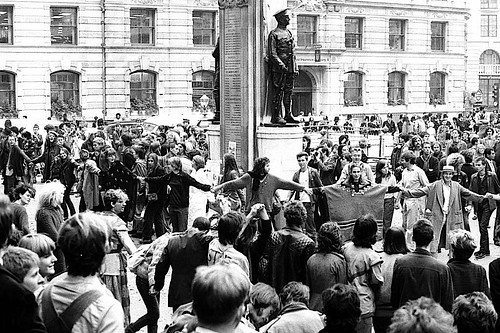
 Students, pensioners and working people are marching in London to the Bank of England today to make it clear to the government and the bankers that we will not pay for their crisis. Assemble outside the Bank of England at 4pm today.
Within a day of confirming £50bn to part-nationalise Britain's biggest banks, this figure was turned into £500bn. There was talk of another £50bn available to the eight largest banks and building societies, another £200bn for short-term borrowing to provide liquidity and a special company to provide up to £250bn in loan guarantees. Did the taxpayer ever get a chance to agree to this change? Or indeed the whole idea of bailing out the banks and the bankers? The short answer is no.
But part of the problem is, so far, "recapitalisation" of the banking industry has done nothing to regain confidence in the markets, let alone being a "bold and far-reaching solution" to the crisis, as Gordon Brown would have us believe. This is because nobody knows the extent of "toxic assets" or where they are located, least of all the government. The FTSE index has lost nearly 19 percent so far this week, just short of the losses during the crash of 1987.
So where does HM Treasury get all this money? Government borrowing means that the taxpayer pays for this crisis. In time this means there will be less money for schools, less money for hospitals and less money for the things that the majority need; that is, unless the government chooses to spend public money on these things. Or, unless the public makes the government spend money on these things.
Even if city bonuses are reduced from their staggering levels, the Centre for Economics and Business Research reports that the forecast for bonuses to be paid out this year is £3.5bn. Billions in company profits among energy companies such as British Gas and supermarkets such as Tesco, combined with rising fuel and food prices by these same companies, is only feeding anger among working people.
Pensioners are also being hit badly by the crisis, with no benefit from the bailout. According to analysts, in the last month alone, retirement savings have lost more than 10% of their value as investors sell their shares to avoid the worst effects of the credit crunch. Ros Altmann, an independent pensions analyst said, "the government's response to the credit crunch is dreadful for pensions. This knee-jerk panic reaction shows no sign of understanding how we got into the mess, nor how to get out of it."
This is why students, pensioners and working people are marching to the Bank of England today to make it clear that we will not pay for their crisis. When it comes to bailing out the banks and the bankers the government can find hundreds of billions of pounds, but when it comes to pensioners freezing in their homes, student poverty, or money for the NHS, the message from the government is that we need to tighten our belts. This is our chance to say no.